How Turkiye, Saudi Arabia, and Pakistan Plan to Build a Defense Shield
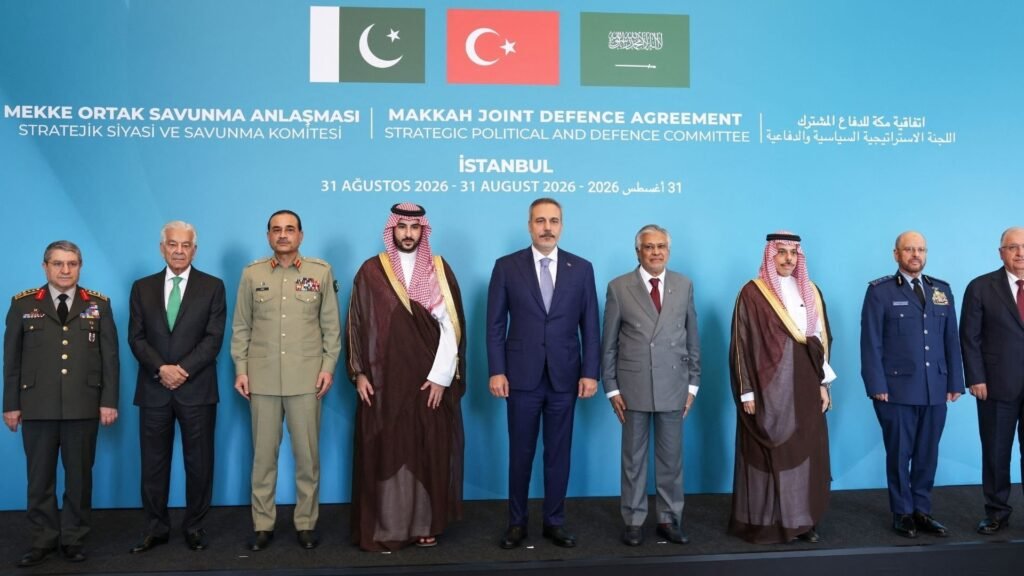
Officials from Turkiye, Saudi Arabia, and Pakistan meet in Istanbul to turn their historic Mecca mutual defense pact into a real-world military alliance.
A bold new security alliance is beginning to take shape in the Middle East and South Asia. On August 7, leaders from Turkiye, Saudi Arabia, and Pakistan gathered in the holy city of Mecca to sign a historic security pact. The core of this agreement is direct: an attack on any one of these three nations will be treated as an attack on them all.
But signing a declaration is the easy part. The real challenge is making it work in the real world. Right now, defense and foreign ministers from the three capitals are meeting in Istanbul to figure out how to translate those grand promises into an active, operational military framework.
Moving From Paper to Policy
The Istanbul meetings are focused on the practicalities of collective defense. To make the pact viable, the three countries must find ways to coordinate their defense manufacturing and deepen industrial cooperation. It is a massive task. They are trying to sync up three very different military systems and strategic outlooks.
The geopolitical backdrop could not be more tense. The Middle East remains highly volatile, with the conflict involving Iran showing no signs of winding down. For Riyadh, Ankara, and Islamabad, the security pact is a way to project strength. Yet, turning a mutual defense promise into a functional military model requires overcoming steep operational hurdles.
Bridging the Gaps in Defense Production
A key focus of the ongoing talks is defense production. Each country brings different strengths and vulnerabilities to the table. Turkiye boasts a highly advanced, rapidly growing domestic defense industry, famous for its combat drones and naval tech. Saudi Arabia possesses immense financial power and a strong desire to build up its own domestic military manufacturing rather than relying solely on Western imports. Pakistan has a large, battle-hardened military and nuclear capabilities, though its economy is currently under severe strain.
For the alliance to succeed, these three distinct setups must complement one another. This means sharing sensitive technology, setting up joint ventures, and aligning defense supply chains. It is a complex puzzle that military planners are now trying to solve.
Strategic Obstacles and Differing Priorities
Analysts are quick to point out the obstacles in front of this budding alliance. Muhanad Seloom, a Non-Resident Senior Fellow at the Middle East Council on Global Affairs, notes that aligning different military doctrines is a massive undertaking. The three nations do not always share the same immediate threats. Pakistan has long focused its military strategy on its eastern border. Saudi Arabia’s primary security concerns are regional rivals in the Gulf. Turkiye, meanwhile, balances its commitments as a NATO member with operations in Syria and security interests in the Mediterranean.
Economic and technical integration will also require careful handling. Rabia Akhtar, Dean of the Faculty of Social Sciences at the University of Lahore, suggests that linking these defense sectors is easier said than done. While Saudi capital and Turkish technology seem like a perfect match, merging supply chains requires navigating thick bureaucratic red tape and intellectual property issues.
There are also broader geopolitical questions. Galip Dalay, a Senior Research Fellow at Chatham House specializing in Turkish foreign policy, emphasizes the diplomatic balancing act ahead. How will global superpowers, particularly the United States and China, view this new three-way defense partnership? Each of the three allies must protect its existing international relationships while building this new regional bloc.
What Lies Ahead?
The meetings in Istanbul will serve as a bellwether for the Mecca agreement. If the three nations can agree on concrete joint projects and establish a clear command structure, this pact could reshape the regional security balance. If not, it risks becoming another high-profile diplomatic agreement that exists only on paper. For now, defense officials are working behind closed doors to turn a historic pledge of solidarity into a working military reality.