Supreme Court Allows White House to Continue $400M Ballroom Work
A divided Supreme Court has allowed construction to continue on a controversial $400 million White House ballroom despite a lack of congressional approval.
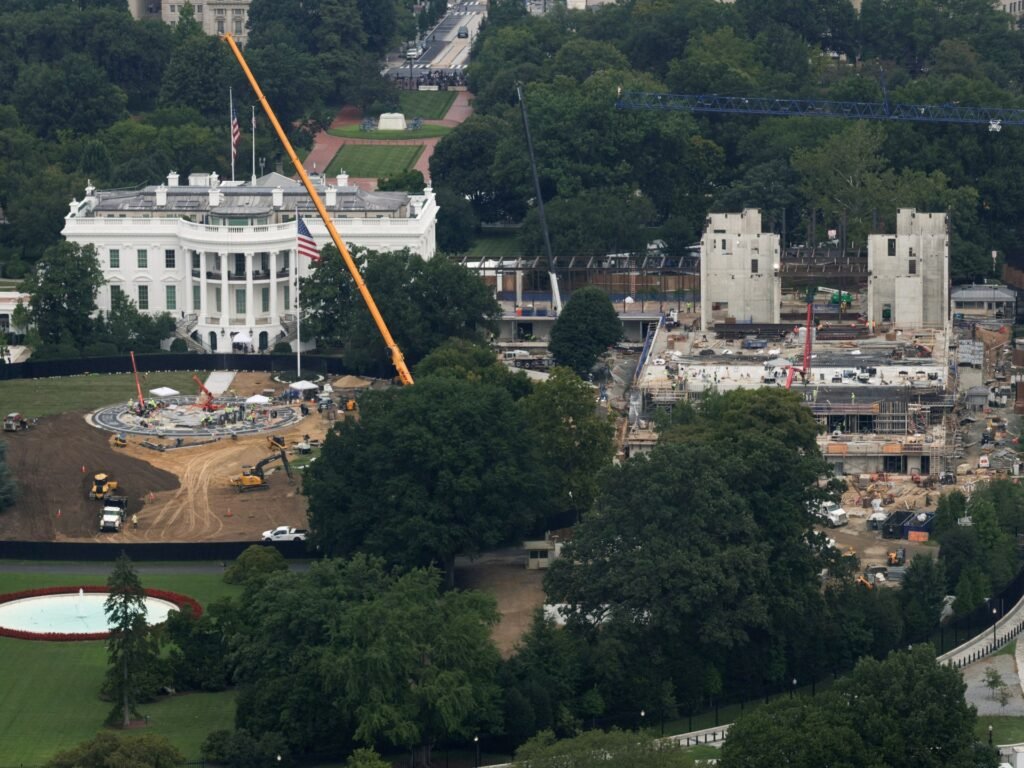
The Supreme Court has cleared the way for the Trump administration to keep building a massive, $400 million ballroom at the White House. In a split decision, the justices lifted a brief pause on the project. This allows construction crews to keep working on the structure, even as legal battles over the development drag on in the lower courts.
It is a major win for President Donald Trump. He has pushed hard to reshape the capital’s historic grounds. But the project has drawn fierce criticism.
A Divided Court
The 5-4 ruling came with a sharp, public disagreement from Chief Justice John Roberts. Assigned to oversee emergency appeals from Washington, D.C., Roberts had previously issued a temporary freeze. This time, he broke with the conservative majority. He wrote a pointed dissent, joined by the court’s three liberal justices, warning that the court was overstepping.
“Today’s decision is no victory for the separation of powers,” Roberts wrote. He called the project “likely unlawful” because the administration bypassed Congress to fund and build it.
The court’s majority did not rule on whether the ballroom itself is legal. Instead, they focused on who has the right to complain. In an unsigned opinion, the majority suggested that the National Trust for Historic Preservation, the group suing the government, probably does not have the legal standing to challenge the project in court. The justices also pointed to national security arguments raised by administration lawyers.
Now, the fight goes back to the lower courts. But time is on the administration’s side. Because of the ruling, builders can keep working. Key parts of the project could be finished in just a few months, effectively rendering the legal challenge moot before a final trial can even happen.
Demolishing the East Wing
The dispute centers on a massive 90,000-square-foot addition. The project has already seen the demolition of the historic East Wing, which once housed the first lady’s offices and the White House movie theater. Originally built in 1902 during Theodore Roosevelt’s presidency and expanded in 1942 under Franklin D. Roosevelt, that wing is now gone.
In its place, the administration is building what it calls an “integrated military complex” that features a secure ballroom. Crews are working 20 hours a day to get it done. The steel framework should be finished by November, and the facade is expected to be up by April. The entire project is slated for completion in August 2028.
It is a massive shift from how the project was first presented. When Trump first announced the ballroom, he said it would be funded by private donations. Later, as lawsuits mounted, government lawyers pivoted. They began arguing that the space is a vital national security asset.
Solicitor General D. John Sauer argued that blocking the project was “extraordinary and unlawful.” He told the court that a secure ballroom and military facility are urgently needed.
The Legal Battle Continues
Preservationists see it differently. They argue the administration is simply trying to build a vanity project as quickly as possible to outrun the legal system. They say the president does not have the authority to unilaterally demolish and rebuild the White House.
The legal battle has bounced through the system for months. In April, U.S. District Judge Richard Leon ordered a halt to the aboveground work on the ballroom. He ruled that while underground military bunkers could proceed, the ballroom could not. A federal appeals court later upheld that halt in a 2-1 decision, with two Democratic-appointed judges ruling that the project was a matter for Congress, “not a matter for Executive self-help.”
By lifting that ban, the Supreme Court has handed the White House a critical victory. While the administration has sometimes lost major policy battles after full hearings, its track record on the court’s emergency docket remains strong. For now, the bulldozers and cranes at the White House will keep moving.