Fortnite Disney Store Redefines Digital Toy Sales
Epic Games’ permanent Disney storefront in Fortnite Chapter 7 is shifting kids’ spending from physical toys to digital assets.
Kids don’t want plastic action figures anymore. They want pixels. And Epic Games is more than happy to sell them those pixels in a brand-new way.
When Fortnite Chapter 7 went live, players flooded the servers to check out the fresh map and weapon pool. But the most significant change didn’t happen on the battle royale island. It happened in the Item Shop. With the quiet debut of the permanent “Disney Universe” storefront, Epic Games has officially turned its virtual lobby into a massive digital department store.
The End of Shopping Anxiety
For years, Fortnite’s business model relied heavily on the fear of missing out, or FOMO. Skins appeared in the shop for 24 hours, vanished, and might not return for hundreds of days. It forced quick, impulse purchases. If you didn’t buy that Marvel skin tonight, you might not see it again for a year.
The Disney Universe store tears up that playbook. It is a permanent fixture. Whether you want Elsa from Frozen, Jack Sparrow, or Darth Vader, these characters are always on the shelf. They are organized by brand, complete with virtual aisles for Pixar, Marvel, and Star Wars.
“It changes the psychology of how young players spend,” says Marcus Vance, a retail analyst who tracks digital entertainment trends. “We are seeing a shift from panic-buying to planned curation. Kids are treating this store exactly like a physical toy aisle. They browse, they save up their allowance, and they buy when they are ready.”
Replacing the Physical Toy Aisle
This shift has massive implications for traditional toy companies. Giants like Hasbro and Mattel have struggled to capture the attention of Gen Alpha, a demographic that spends far more time looking at screens than playing with physical action figures on the living room rug.
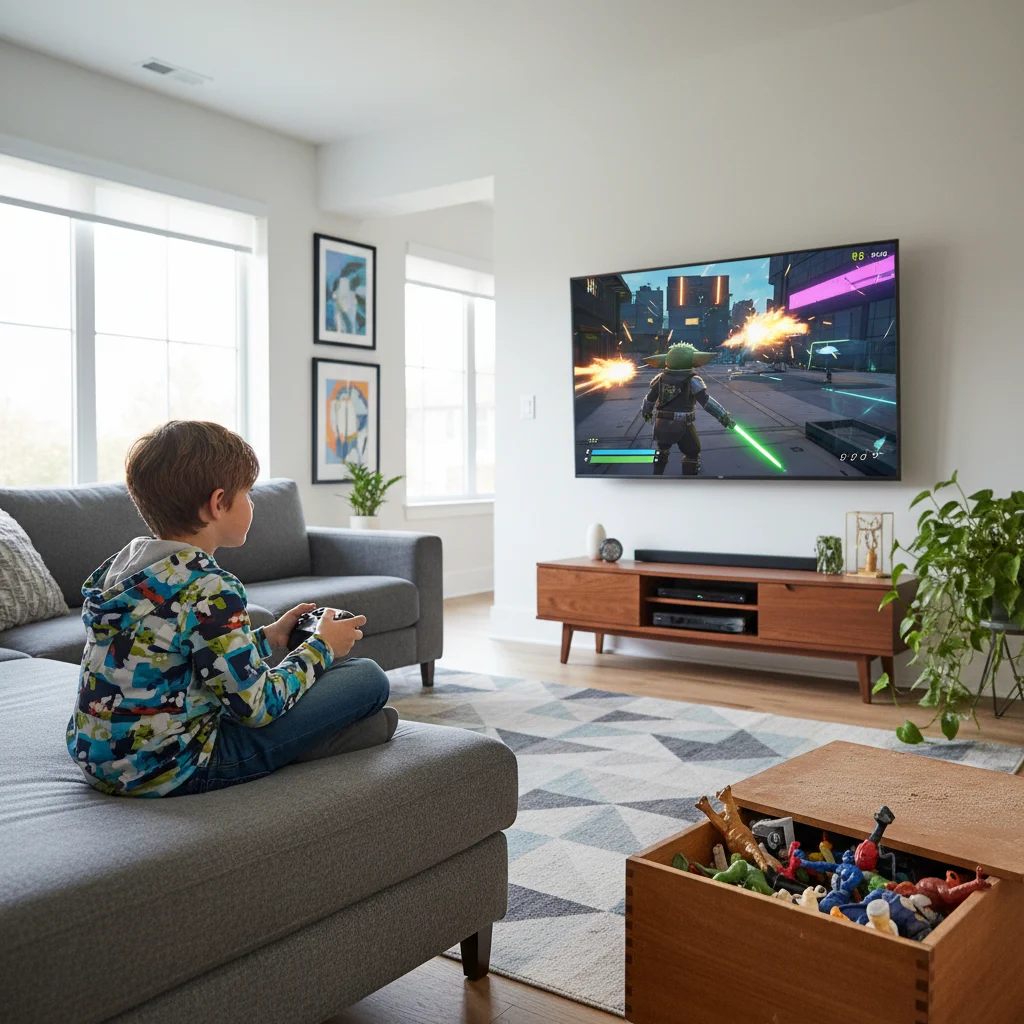
A digital skin in Fortnite costs between 1,200 and 2,000 V-Bucks—roughly $10 to $16 in real-world currency. That is the exact price point of a standard plastic action figure at Target or Walmart. But for a ten-year-old today, a digital skin has infinitely more utility. You can’t take a plastic Iron Man into a virtual concert with your friends from school. You can’t make a physical Luke Skywalker do a synchronized dance routine in front of millions of other players.
Parents are noticing the change in their household budgets, too. “My son used to ask for Lego sets for his birthday,” says Jessica Miller, a mother of two from Chicago. “Now, he just wants a twenty-dollar V-Bucks card. He goes right to the Disney section of Fortnite to buy Star Wars characters. He says his real toys just sit in the closet gathering dust, while his digital ones get used every single day.”
Executing the $1.5 Billion Vision
This permanent store is the first major, visible fruit of Disney’s massive $1.5 billion investment in Epic Games, which was announced in early 2024. At the time, Disney CEO Bob Iger called it the company’s biggest entry ever into the world of games.
By establishing this permanent presence, Disney has secured a direct pipeline to millions of young consumers without having to pay slotting fees to physical retailers. It also allows Disney to cross-promote its movie releases instantly. When a new Pixar film hits theaters, the characters can appear in the Fortnite store simultaneously, staying there indefinitely for fans to discover months down the line.
But the real genius lies in the ecosystem. Epic isn’t just selling cosmetic skins; they are selling compatibility. A single purchase often unlocks a regular character skin, a Lego-style version for Lego Fortnite, and sometimes even unique instruments or vehicle bodies for the game’s other modes.
What Lies Ahead for Digital Retail
As Chapter 7 progresses, other entertainment brands are reportedly watching the Disney experiment closely. If a permanent storefront works for Mickey Mouse, it could work for anime giants, sports leagues, or major fashion houses. The era of the chaotic, rotating storefront might be coming to an end, paved over by organized, digital malls.
Fortnite is no longer just a battle royale game. It has successfully completed its transition into a social platform and a retail giant. For physical toy manufacturers, the warning signs are flashing red. For players, the virtual toy box has never been bigger.