Fortnite Pros Use Tracker Stats to Fight Stream Snipers
Competitive Fortnite players in Chapter 7 are using Fortnite Tracker’s new real-time lobby metrics to spot and dodge stream-snipers before matches start.
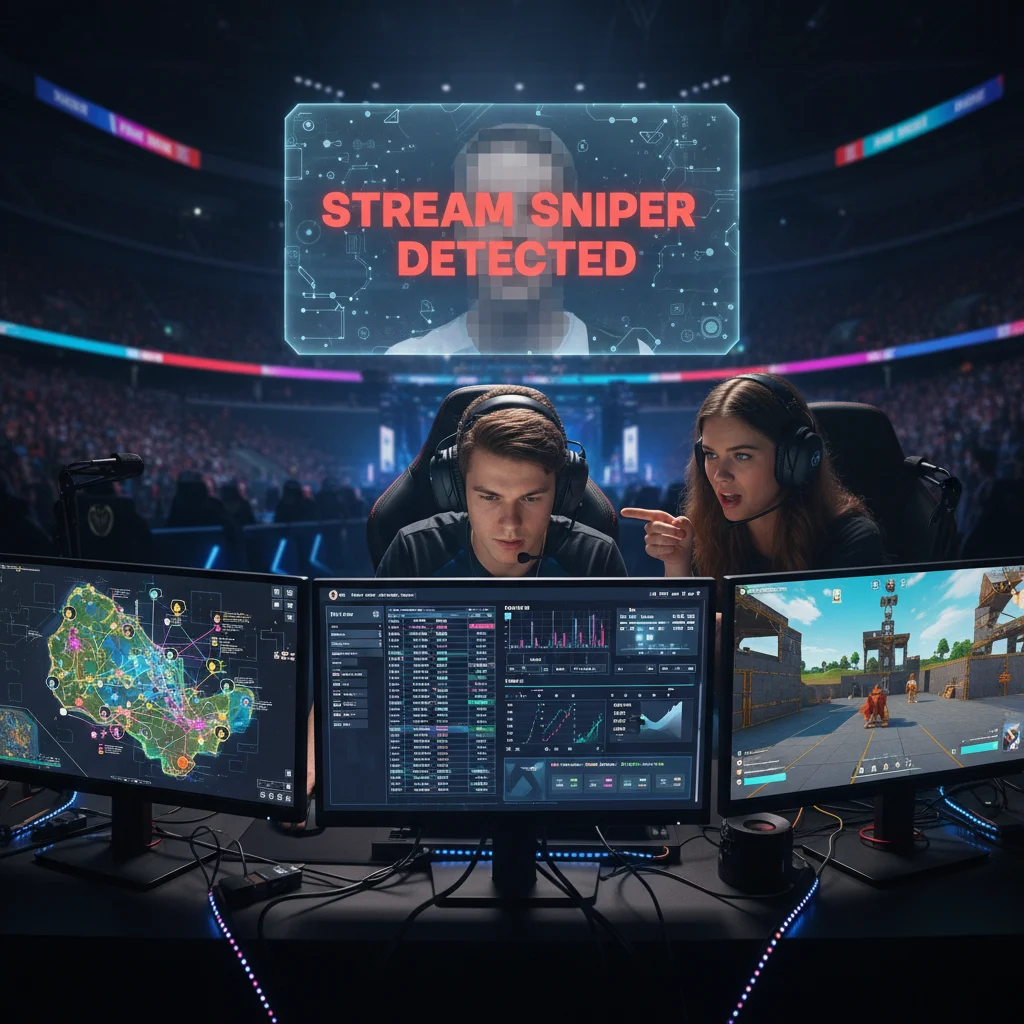
Stream-sniping has plagued competitive Fortnite since the battle royale first took off. For high-profile streamers, queuing up for a match often means inviting a dozen unwanted guests who know exactly where they are landing. With the arrival of Chapter 7, players are turning to a new weapon to level the playing field: data.
Fortnite Tracker, the popular stats platform run by Tracker Network, recently rolled out a real-time lobby-difficulty metric. The tool is quickly becoming a staple on the second monitors of competitive players and streamers alike. By analyzing the public stats of everyone in a lobby as the match forms, it gives creators a head start against griefers.
How the Real-Time Metric Works
The system is straightforward but powerful. As soon as a player connects to a match, the tracker scans the lobby. It aggregates public player data to calculate an overall difficulty score. This score is based on several key data points:
- Average lobby K/D (kill-to-death) ratio
- Combined win percentage of the active players
- Recent tournament performance and Power Rankings (PR)
- The concentration of brand-new or unranked accounts
Within seconds, the tool assigns the lobby a rating, such as “Gold,” “Diamond,” or “Champion.” It also flags statistical anomalies. If a lobby suddenly fills with an unusual number of highly ranked players—or suspiciously fresh accounts—the system alerts the user.
Spotting the Snipers Before the Bus Launches
This instant feedback is where the anti-sniping strategy comes in. Stream-snipers often use specific tactics. Some queue up on highly ranked accounts to ruin tournament practice, while others use throwaway, low-stat accounts to bypass skill-based matchmaking (SBMM) and target their favorite streamer.
“Before this, we had to guess,” says professional player and streamer Marcus “Tectonic” Vance. “You would just land, get chased by three kids with no shields who somehow knew your exact bush, and then queue up again. Now, I look at the tracker on my side screen. If my average lobby K/D jumps from a normal 1.8 to a crazy 4.2 in a split second, I know something is wrong. I just leave before the battle bus even launches.”
By backing out during the pre-game island phase, streamers can dodge coordinated sniping campaigns without losing points or wasting time. It also starves the snipers of the attention they crave. If the streamer never actually starts the match, the sniper is left sitting in a lobby alone.
A Needed Shield in Chapter 7
Fortnite Chapter 7 has introduced massive map changes and faster pacing, making early-game survival more critical than ever. In tournaments where every placement point counts, getting taken out early by a stream-sniper can ruin a player’s entire tournament run. Epic Games has long had rules against stream-sniping, but proving it is notoriously difficult. It often requires submitting vods and waiting days for a review.
This new third-party metric acts as a proactive shield. Instead of reacting to snipers after the fact, players can avoid them entirely. Competitive coach Jeremy “Slick” Patterson believes this is a massive shift in how pros manage their live broadcasts. “It puts the control back in the hands of the creator,” Patterson says. “You don’t have to put your stream on a ten-minute delay anymore. A ten-minute delay kills chat interaction, which kills your revenue. This tool lets guys stream with a minimal delay because they can audit their lobbies in real time.”
The Limits of Data
Despite its utility, the tool is not foolproof. It relies entirely on public profile data. If a sniper sets their Fortnite career stats to private, the tracker cannot read their information.
Furthermore, the sheer speed of Fortnite’s matchmaking means players only have a window of about 30 to 60 seconds on the spawn island to make a decision. If they hesitate, they get locked into the match. Some competitive purists also worry that pros might use the tool to “lobby-shop”—repeatedly dodging matches until they find an unusually easy lobby to boost their stats or content.
Still, for most creators, the benefits far outweigh the risks. In a landscape where stream-sniping is a constant threat, having a real-time warning system is the closest thing they have to a fair fight.