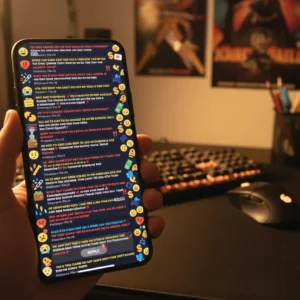
Fortnite Tracker Live Lobby Tool Reshapes 2026 FNCS Qualifiers
Competitive Fortnite teams are leveraging Fortnite Tracker’s new live lobby scouting tool to gain a massive strategic edge in the 2026 FNCS qualifiers.
The battle for a spot in the 2026 Fortnite Champion Series (FNCS) Global Championship has reached a fever pitch. But this year, the fight isn’t just about who has the fastest edits or the sharpest aim. It is happening on second monitors. A new live lobby scouting tool launched by Fortnite Tracker is fundamentally changing how elite duos prepare for and react during high-stakes qualifying matches.
For years, competitive Fortnite was a guessing game of drop spots and rotational paths. You knew who was in your lobby only after the kill feed started lighting up. Not anymore. The new utility allows coaches and analysts to pull up real-time data on every single player in their lobby before the battle bus even takes off.
It is a massive shift.
“We used to spend hours reviewing old streams to guess where people might land,” says Marcus “Zephyr” Vance, a veteran coach for an EMEA esports organization. “Now, we get a complete snapshot of our lobby in seconds. We know who is contested, who is on a hot streak, and who we need to avoid in the early game. It has completely changed how we call our drops.”
How the Scouting Tool Works
The tool works by tapping into public API data during matchmaking. As players load into the pre-game island, the software compiles key metrics. It displays recent placement averages, preferred landing spots, and even historical head-to-head records. For analysts, this data is gold.
Imagine knowing that the duo landing next to you at a major Point of Interest (POI) has lost their last four early-game off-spawn fights. That is an invitation to play aggressively. Conversely, if the data shows an extremely passive, high-tier placement team is nearby, you might choose to split the loot and rotate early.

The Debate Over Real-Time Data
Not everyone is thrilled about this level of transparency. Some players argue that real-time scouting cheapens the raw instinct that used to define battle royale success. Epic Games has historically walked a fine line regarding third-party tools. While external overlays and cheat software are strictly banned, public-facing stats trackers have remained in a gray area. Because the tool uses publicly available data that players can technically opt-out of by hiding their career stats, it remains fully legal for tournament play.
But opting out comes with its own drawbacks:
- Hiding public stats blocks players from various third-party tournament platforms.
- Many practice scrim lobbies require public verification to join.
- Teams lose the ability to track their own detailed performance metrics over time.
Most pros choose to leave their stats public, accepting that they will be scouted if it means they can keep participating in elite practice matches.
High Stakes and New Meta
The financial stakes make any advantage worth pursuing. The 2026 FNCS Global Championship boasts a multi-million dollar prize pool. Missing out on qualification by even a single point can cost a team tens of thousands of dollars in potential earnings and sponsorships.
“If you aren’t using this tool, you’re throwing,” says pro player Tyler “Kova” Jenkins, who currently sits in the top ten of the North American qualifiers. “Our analyst sits in Discord and reads out the lobby composition while we are loading in. He tells us which side of the map has the weaker duos. We adjust our mid-game rotation on the fly based on that. It is that simple.”
This live data stream has also made the role of support staff more critical than ever. In the early days of Fortnite esports, coaches were often just hype men. Today, they function more like traditional sports coordinators. They parse real-time statistics, manage player stress, and make tactical adjustments in a fraction of a second.
As the qualifiers march toward the final rounds, the meta will keep evolving. Teams are already trying to feed the tracker false data by playing scrims on alternate accounts, hoping to throw off their rivals’ scouting profiles. It is a game of digital cat-and-mouse. But for now, the screen next to the game has become just as important as the game itself. The teams that can turn raw data into quick decisions are the ones booking their tickets to the global stage.