Fortnite Chapter 7 Hologram Skins Spark Pay-to-Win Outcry
Epic Games’ new Dynamic Hologram skins in Fortnite Chapter 7 are facing major backlash from competitive players over hitbox visibility.
Fortnite Chapter 7 has arrived, bringing the usual chaotic mix of new weapons, map changes, and battle pass rewards. But the biggest talking point isn’t a new gun or a traversal mechanic. Instead, a fresh tier of cosmetics called “Dynamic Hologram” skins has thrown the community into a fierce debate over competitive integrity.
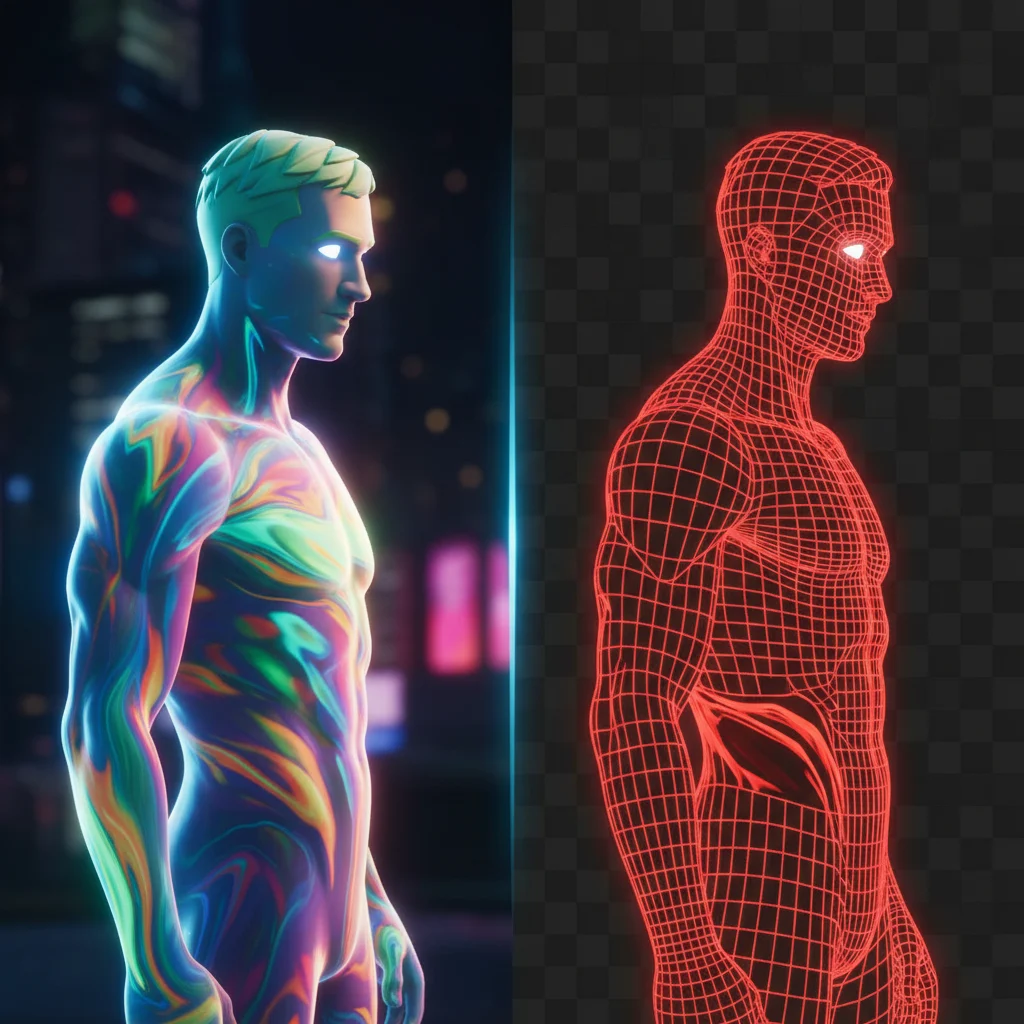
These new outfits feature reactive, semi-transparent holographic projections that shift shape, pulse with light, and change opacity depending on the player’s movement and health levels. While they look undeniably spectacular, professional players argue that the visual effects compromise the core physics of the game. The main issue? Hitbox confusion and unfair visibility advantages.
The Illusion of Shifting Hitboxes
In shooter games, muscle memory is everything. Players train for thousands of hours to snap their crosshairs directly onto an opponent’s head or torso. Epic Games has always maintained that all outfits, regardless of their size or style, share the exact same physical hitbox. Yet, competitive players argue that visual feedback is just as important as the underlying code.
“When a skin’s head physically flickers, shrinks, or projects a secondary floating projection during a jump, it throws off your tracking,” explains professional player Marcus “Vortex” Vance. “The code might say the hitbox is still there, but my eyes are tracking a shifting neon cloud. In a game where milliseconds decide a fight, that is a massive problem.”
During intense close-quarters build fights, these visual discrepancies become even more pronounced. The “Holoshift Ranger” skin, for example, projects a rotating geometric shield around its chest when sprinting. Opponents complain that this effect masks reload animations, making it nearly impossible to tell when a player is vulnerable.
A Question of Visibility
Beyond the hitbox debate, the sheer brightness of the Dynamic Holograms has created a double-edged sword on the battlefield. On one hand, some players find themselves glowing like a Christmas tree in dark environments, making them easy targets. On the other hand, inside the vibrant, neon-drenched urban zones of the new Chapter 7 map, these skins blend seamlessly into the background graphics.
Broadcasters and tournament spectators have also noted that the visual noise makes matches harder to follow. When multiple holographic characters clash in a tight space, the screen erupts into a chaotic blur of neon lights and particle effects. It makes it incredibly difficult for viewers to track who is actually winning the exchange.
Casual players love the flashy aesthetic, viewing the skins as a fun step forward in digital fashion. But the competitive community sees a repeat of history. Fortnite has a long track record of cosmetic controversies. The all-black “Superhero” skins were eventually modified by Epic after players used them to hide in dark shadows. Similarly, the matte-green “Toy Soldier” skins had to be brightened because they blended too perfectly into the island’s grassy hills.
Will Epic Step In?
So far, Epic Games has not announced any plans to restrict the Dynamic Hologram skins from competitive tournament playlists. The company typically monitors telemetry data and player feedback for several weeks after a major launch before making balancing adjustments. If the outcry from high-level tournaments like the Fortnite Champion Series (FNCS) grows too loud, developers may be forced to disable the holographic effects in ranked and tournament play.
For now, the community remains split. Casual lobbies are filled with glowing, shapeshifting squads enjoying the spectacle. Meanwhile, the pros are left frustratingly aiming at targets that might not actually be where they appear to be.