Epic Games’ Chapter 7 API Changes Break Fortnite Tracker Before FNCS
A sudden API update in Fortnite Chapter 7 has broken third-party stats on Fortnite Tracker, leaving pros and analysts stranded ahead of the 2026 FNCS.
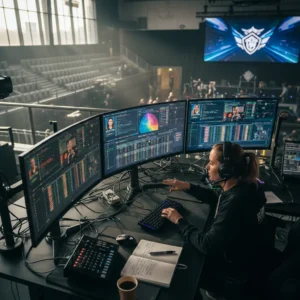
Fortnite Chapter 7 is finally here, but the massive update brought an unexpected headache for the game’s competitive scene. A sudden, unannounced tweak to Epic Games’ public application programming interface (API) has completely broken third-party stat tracking. Fortnite Tracker, the massive database used by millions of players to check their K/D ratios, win streaks, and match histories, has gone dark on several key features.
The timing is brutal. The 2026 Fortnite Champion Series (FNCS) is just around the corner. Now, professional players, coaches, and scouts are suddenly scrambling in the dark without the data they rely on daily.
The Data Goes Dark
For years, competitive Fortnite has lived and breathed data. Coaches use tracking sites to analyze opponent drop spots. Scouts use them to find rising stars in regional divisions. Average players just use them for bragging rights. But when the Chapter 7 update went live, Epic quietly modified how player data is retrieved from their servers. Suddenly, standard request queries started returning errors. Leaderboards froze. Individual profile updates stopped working.
The core of the issue lies in how Epic handles player privacy and data authentication. In Chapter 7, Epic introduced stricter security tokens for pulling player profiles. Now, unless a player has manually verified their account through a tedious, multi-step process on external platforms, their data remains locked behind a digital wall. Public endpoints that used to feed real-time match data to third-party sites are returning 403 Forbidden errors.
A Scramble Behind the Scenes
The developers behind Tracker Network, which runs Fortnite Tracker, are trying to salvage what they can. “We are currently working through some massive changes Epic made to the game’s backend,” the site’s support team shared in a brief update. They are looking for workarounds, but it is an uphill battle. Epic’s new security measures seem designed to restrict automated data harvesting entirely. While this might protect casual player privacy, it guts the analytical tools the community spent nearly a decade building.

The competitive community is feeling the sting immediately. With the 2026 FNCS season starting soon, professional trios and duos are in the middle of intense scrims. Without reliable APIs, tournament organizers cannot easily track custom match lobbies, and analysts cannot pull accurate placement data.
Why the FNCS Prep is Ruined
“It completely changes how we prepare for tournaments,” says an anonymous professional coach who works with a top-tier European duo. “Normally, I can look up every single opponent in our lobby. I can see where they like to land, their average survival time, and who they struggle against. Right now, we are flying completely blind. We have to rely on manual vod-reviewing, which takes ten times longer.”
This is not the first time Epic Games has clashed with third-party developers, but it is certainly one of the most disruptive. Historically, Epic has championed its open creator ecosystem. However, rising concerns over data scraping and player privacy have forced the developer’s security teams to tighten control. Benign services like Fortnite Tracker are simply caught in the crossfire.
What Happens Next?
Right now, the only real fix requires players to log into their Epic accounts on third-party platforms to manually authorize data sharing. It is a slow, clunky process. Most casual players simply won’t bother. This means the overall data pool on Fortnite Tracker will shrink dramatically, skewing average stats and making public leaderboards far less accurate than they used to be.
If Epic does not release a dedicated API endpoint for tournament organizers and statistical sites soon, the 2026 FNCS broadcast might look very different. Spectators are used to seeing detailed player cards and historical stats during live streams. Without a fix, those broadcast graphics might remain blank. For now, the competitive community is keeping its fingers crossed, hoping Epic will throw them a lifeline before the first tournament bus takes off.