Lockerbie Bombing Trial Delayed Over New Evidence
A federal judge has postponed the historic US trial of alleged Lockerbie bombmaker Abu Agila Mohammad Mas’ud after the sudden discovery of new evidence.
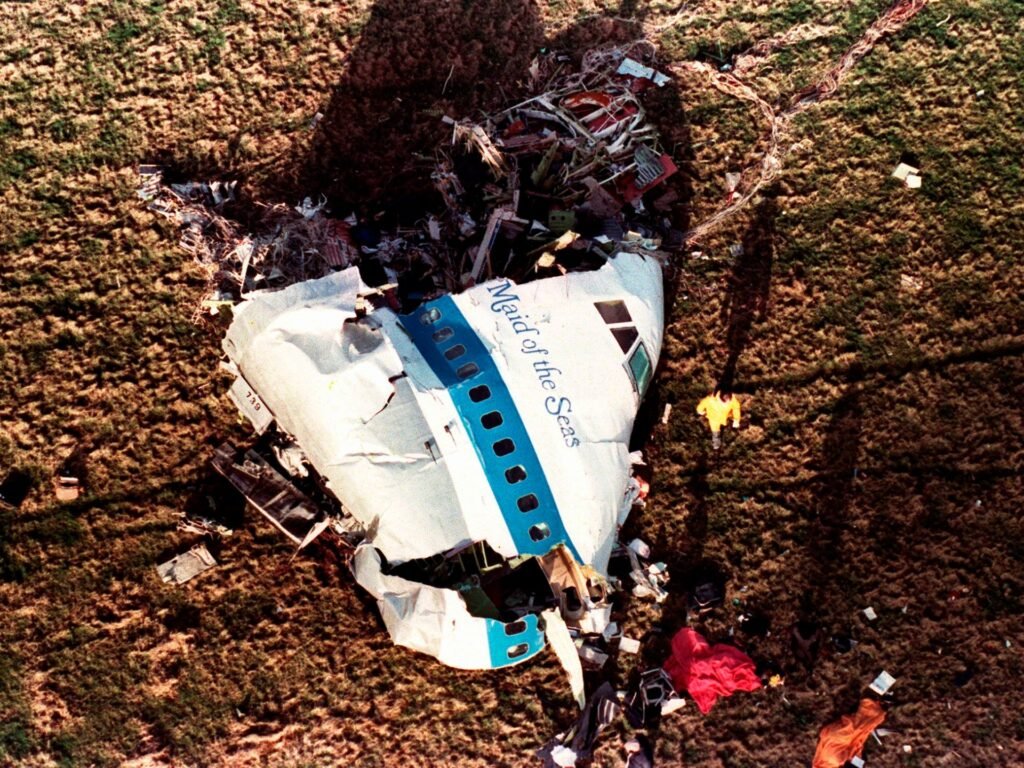
The trial of the former Libyan intelligence operative accused of making the bomb that blew up Pan Am Flight 103 has hit another sudden roadblock. A federal judge in Washington, DC, scheduled a crucial hearing for Tuesday to map out the next steps after unexpected new evidence derailed the long-awaited trial.
Jury selection was ready to roll last week. Then came the twist. U.S. District Judge Dabney Friedrich postponed the entire proceeding. She did not specify what the new evidence was, but defense lawyers for Abu Agila Mohammad Mas’ud Kheir Al-Marimi said they received it from federal prosecutors just days before the trial was set to start. The defense argued they needed time to investigate the new material, citing their ethical and constitutional duties.
This delay pushes a trial that was already years in the making even further into the future. Now, it looks like the proceedings might not actually start until next year. It is the latest development in a saga that has stretched across nearly four decades. For the families of the victims, the wait for justice goes on.
The Flight 103 Disaster
The bombing of Pan Am Flight 103 on December 21, 1988, remains the deadliest terror attack in British history. The Boeing 747 was flying at 31,000 feet, just 38 minutes after taking off from London’s Heathrow Airport on its way to New York. Then, a bomb went off in the cargo hold.
The plane broke apart over Scotland, and the wreckage rained down on the quiet town of Lockerbie. All 259 people on board were killed. On the ground, the falling debris destroyed an entire city block, killing another 11 people.
In total, 270 people from 21 different nations died. Among them were 190 Americans, including 35 study-abroad students from Syracuse University who were heading home for the Christmas holidays.
The Alleged Plot
Mas’ud, who is now in his mid-70s, was charged by U.S. authorities in late 2020. That was exactly 32 years after the disaster. Two years later, he was taken into U.S. custody. He faces life in prison if convicted on two counts of destruction of an aircraft resulting in death. He has pleaded not guilty and denies making the bomb.
The U.S. government claims Mas’ud was a colonel in Libya’s intelligence service, working there from 1973 until the fall of dictator Muammar Gaddafi in 2011. Investigators allege the plot was directed by Gaddafi himself.
According to prosecutors, Mas’ud flew from Tripoli to Malta with a bomb hidden inside a Samsonite suitcase. He allegedly met up with accomplices, set the timer for 11 hours, and watched the bag get loaded onto an airport conveyor belt before flying back to the Libyan capital.
A Long Investigation
The joint Scottish-American investigation has been running since December 1988. Mas’ud is only the third person ever charged in connection with the attack, and his trial will be the first held on American soil.
The two other men accused in the plot, Abd al-Basit al-Magrahi and Al-Amin Khalifa Fahimah, went on trial before Scottish judges in a special court in the Netherlands in 2000. Fahimah was acquitted and died recently on August 25. Magrahi was convicted and sentenced to life, but was released on compassionate grounds in 2009 because of terminal cancer. He died in Libya in 2012.
Mas’ud’s trial has been delayed multiple times before. It was initially set for May 2025, but lawyers on both sides asked for a delay because the case is so complex and because Mas’ud has been in poor health. It was rescheduled for this past April, then pushed back again, and now this latest delay adds another chapter of uncertainty to one of the most famous aviation disasters in history. Tuesday’s hearing will try to bring some order to the chaos, but a final resolution still feels a long way off.