How Fortnite Tracker’s Live Telemetry Changes FNCS Scouting
A new real-time telemetry tool from Fortnite Tracker is changing how pro coaches prepare for matches in the 2026 FNCS Fall Series.
A Quiet Revolution in Competitive Fortnite
The professional Fortnite scene is undergoing a massive shift. With the 2026 FNCS Fall Series officially underway, coaches are no longer just staring at laggy stream feeds and scribbling notes on legal pads. Instead, they are monitoring live, second-by-second telemetry data. It is a level of analytical depth the scene has never seen before.
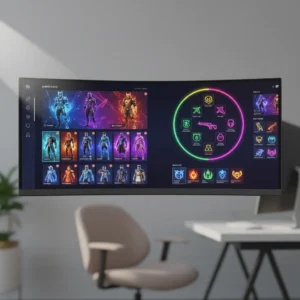
It is all thanks to a major platform upgrade. Fortnite Tracker recently rolled out its Live Match Telemetry engine. The tool is rapidly changing how elite teams prepare between games in a tournament lobby.
The End of Post-Match Guesswork
Historically, scouting was a slow, retrogressive process. Analysts spent hours dissecting replay files long after a tournament ended. But in a fast-paced, six-match grand final, yesterday’s data only goes so far. Teams need to make adjustments on the fly. They need to know what their rivals are doing right now.
“Before this, we were practically guessing how our rivals adjusted their drop splits mid-tournament,” says Alistair ‘Kova’ Campbell, a veteran coach currently working with a top European duo. “Now, I can see exactly where our main competitors landed, what loot they walked away with, and their exact surge damage differential within minutes of the match kicking off.”
To comply with competitive integrity rules, the new telemetry dashboard operates on a strict two-minute delay. This prevents active stream-sniping. However, the sheer depth of information available is unprecedented. The system tracks player positioning, inventory rarity, shield economy, and storm surge thresholds in near-real-time.
Cracking the Storm Surge Code
For years, storm surge has been the ultimate test for professional duos. The mechanic periodically damages players who fail to inflict enough active damage on opponents during crowded late-game zones. Keeping track of this requirement used to require intense mental math under extreme pressure.
The new tracker tool changes that. It visualizes the entire lobby’s health and damage output live. This allows coaches to calculate the exact tag requirements their players need, relaying the data just before the next game queue begins.
Sarah Chen, a senior developer at Tracker Network, shed light on the engineering challenge behind the tool. “Extracting live server state data without violating Epic Games’ security protocols was incredibly difficult,” Chen says. “We had to rebuild our ingestion pipeline from scratch. The goal was to translate raw game packets into an intuitive dashboard that a coach can read in five seconds flat.”
Data vs. Instinct
The reaction from the pro community has been mixed, though adoption is skyrocketing. Some purists argue that live telemetry strips away the organic “game sense” that separates legendary players from average ones. If a dashboard tells you exactly when a lobby is going to play passively, the instinctual reading of the game becomes less valuable.
“It turns a battle royale into chess,” says retired pro turned analyst Tyler ‘Breezy’ Vance. “Some people want chess. Others want the chaotic, unpredictable game we fell in love with years ago. Either way, you can’t ignore the data. If you aren’t using this tool, you are actively throwing your tournament.”
As the Fall Series progresses toward the grand finals, the gap between data-driven duos and traditionalists is widening. Early statistics from the semi-finals show that teams utilizing live telemetry adjustments improved their average match-to-match placement by over four spots in the back half of tournament sets.
In a game where a single point can determine who takes home hundreds of thousands of dollars, those four spots are everything. The meta has shifted. It is no longer just about who has the best mechanics, but who has the fastest data loop.