How Fortnite Tracker API is Changing Esports Scouting
A new Epic Games API integration on Fortnite Tracker is completely changing how pro esports teams scout talent for the 2026 FNCS Invitational.
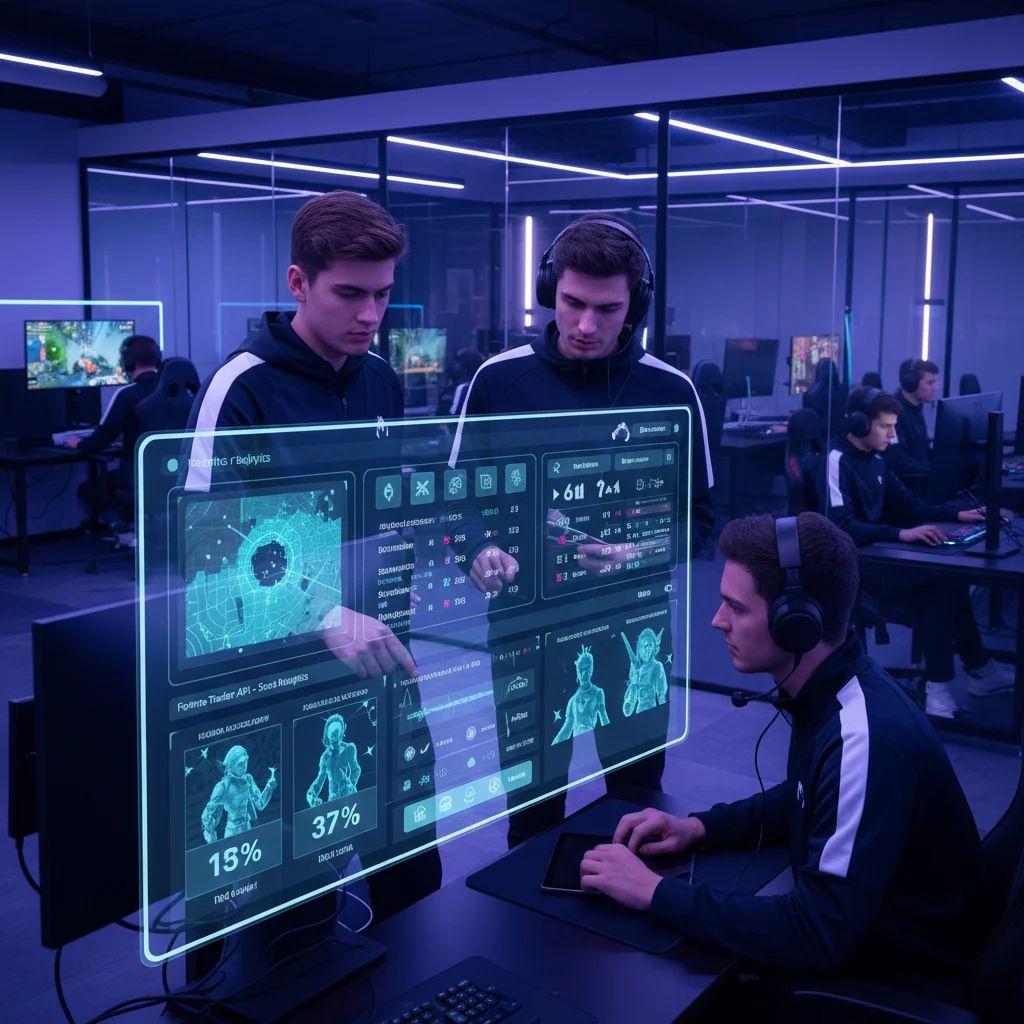
The hunt for the next Fortnite prodigy just got a lot more scientific. Ahead of the highly anticipated 2026 Fortnite Champion Series (FNCS) Invitational, the scouting game has shifted entirely to hard numbers. A major update to the Epic Games API, integrated directly into Fortnite Tracker, is giving professional esports organizations unprecedented access to player performance data. It is no longer just about who gets the most eliminations. It is about how they get them.
For years, finding raw talent was a guessing game. Coaches spent hundreds of hours watching Twitch streams, scrolling through social media looking for highlight clips, and manually loading up replay files in the game client. They hoped to spot a mechanical prodigy before a rival organization did. But that era is officially over.
“Before this update, we were basically scouting with our eyes closed,” says Liam “Apex” Sterling, head analyst for Team Vanguard. “A kid could win three Cash Cups in a row, but we could never tell if he was genuinely elite or just getting lucky zone pulls. Now, we can see his exact material consumption in moving zones. We can see his damage-to-death ratio during active storm surge. That is the kind of data that wins championships.”
Inside the New Metrics
The new API integration allows Fortnite Tracker to pull real-time metrics that were previously hidden from the public. While basic stats like win rates and overall Kill/Death ratios remain public, verified professional organizations can now request access to deep-dive analytics through a newly launched Scout Dashboard.
This portal acts as a central hub where managers can compare players side-by-side. Instead of manually cross-referencing leaderboards, scouts can set up customized filters. For instance, a coach can search for players who average at least 400 storm-surge damage per match while maintaining a building efficiency rating of over 85%. The system instantly ranks the candidates.
Among the most prized new metrics is “Endgame Efficiency.” This stat tracks how a player performs once the lobby shrinks to the final moving circles. It measures average survival time after a duo partner is eliminated, building-to-damage ratios, and even edit-reset speed under extreme pressure.
For orgs preparing for the 2026 FNCS Invitational, where a single mistake can cost a team hundreds of thousands of dollars in prize money, these metrics are gold. They allow teams to identify players who do not just survive, but actively control the chaos of a 50-player lobby.
Leveling the Playing Field for Amateurs
It is not just the big-name teams benefiting from the shift. For rising amateur players, the API update offers a direct route to going pro. Under the old system, players without a massive social media following or a pre-existing network of pro friends were often ignored. Now, their data does the talking.
To protect player privacy, Tracker Network and Epic Games built a secure verification system. Players can link their official Epic accounts to their Tracker profiles and choose to make their advanced telemetry visible only to verified esports recruiters.
“It levels the playing field,” says Alastair Vance, a product lead at Tracker Network. “If you are a 15-year-old kid playing on a budget PC in your bedroom, but you are performing in the top 1% during late-game scrims, you will pop up on a professional radar. You do not need to be a famous streamer anymore. Your numbers will speak for you.”
This data-driven approach is already shaking up the roster market. Several prominent European and North American duos have quietly disbanded over the last month. Industry insiders whisper that these splits were triggered by back-end data reviews showing a lack of synergy in high-pressure endgames.
As the road to the 2026 FNCS Invitational heats up, the pressure is on. Organizations are no longer buying into hype. They are buying into statistics. In a game where milliseconds and single building tiles decide careers, the team with the best data is usually the one that lifts the trophy.