Fortnite Players Revolt Over New Dynamic Item Shop Prices
Epic Games is facing a massive player revolt after quietly testing a dynamic pricing algorithm that jacks up Fortnite skin prices based on popularity.
The Rise of ‘Surge Pricing’ in Gaming
Fortnite players are used to spending money on virtual cosmetics. Over the last seven years, millions have willingly purchased skins, gliders, and emotes. But a controversial new experiment by Epic Games is pushing the community to its breaking point.
Earlier this week, Epic quietly rolled out a “Dynamic Pricing” algorithm in select regional Item Shops. The system operates similarly to ride-share surge pricing or airline ticket booking. If a skin starts trending and selling rapidly, its price in V-Bucks shoots up in real-time. If an item fails to attract interest, the price slowly ticks downward.
A Volatile Digital Market
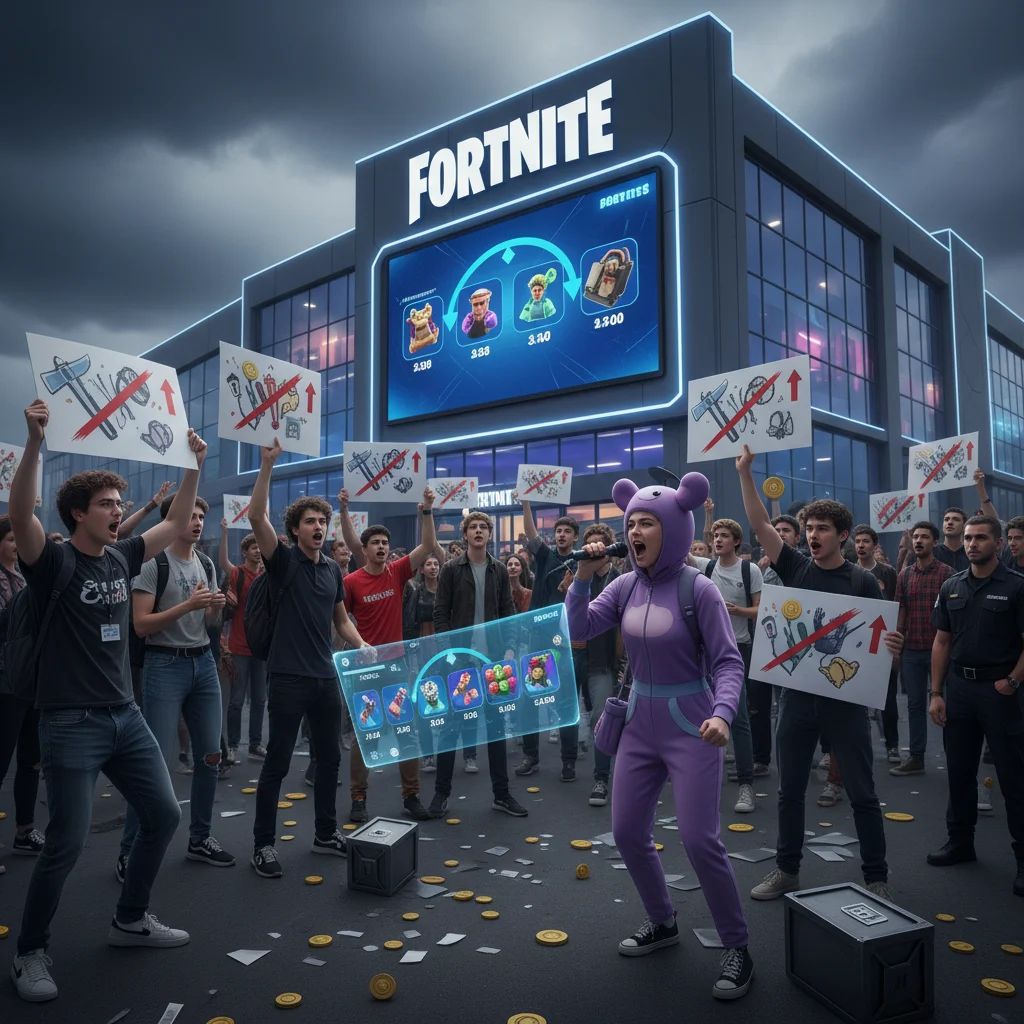
The community reaction was swift and overwhelmingly hostile. Within hours of the update going live in Canada and the United Kingdom, social media platforms were flooded with screenshots of volatile prices. The hashtag #StopTheSurge quickly began trending worldwide on X.
Players watched in real-time as prices fluctuated. For instance, the newly released “Neon Ronin” skin debuted at 1,500 V-Bucks. Within three hours, as players rushed to buy it, the price surged to 2,400 V-Bucks. That is a massive price hike for the exact same cosmetic item.
“This is outright predatory,” wrote one user in a Reddit thread that quickly racked up over twenty-five thousand upvotes. “We are playing a virtual stock market simulator just to get a cosmetic skin. I should not be punished with a higher price just because other people like the same skin I do.”
The rapid price shifts are especially frustrating for players who cannot log into the game the moment the shop resets. Many find themselves locked out of affordable prices because they were at school, working, or sleeping while a skin went viral.
The Psychology of Artificial Scarcity
Industry analysts are also expressing concern over Epic’s latest strategy. Many argue that applying real-world supply-and-demand mechanics to digital goods is fundamentally flawed.
“Dynamic pricing works for plane tickets or concert seats because there is a physical limit on supply,” explained Marcus Vance, an independent digital economy analyst. “But digital assets have infinite supply. Generating another copy of a skin costs Epic nothing. Combining artificial scarcity with real-time surge pricing feels greedy. It risks destroying long-term player trust for a quick boost in quarterly revenue.”
This is not the first time Fortnite’s shop has caused controversy. Earlier this year, Epic faced significant heat when it removed rarity colors from cosmetics, making it much harder for players to judge the baseline value of items. However, the anger over the dynamic pricing test has quickly eclipsed that previous dispute.
Epic Games Responds to the Outcry
Epic Games issued a brief statement addressing the community’s frustration, though it did little to quiet the uproar.
“We are currently testing a dynamic value system in select regions to better understand consumer demand and optimize our offerings,” an Epic Games spokesperson said. “We want to ensure our shop remains dynamic and exciting. We are actively listening to player feedback and adjusting the algorithm’s sensitivity parameters.”
For a passionate player base, that explanation falls flat. Several high-profile Fortnite content creators have already called for a total boycott of the Item Shop. They are urging their millions of followers to keep their wallets closed and refuse to buy any V-Bucks until the developer completely removes the algorithm.
Whether Epic Games will back down remains an open question. The studio has a history of reverting unpopular updates when player retention is threatened. For now, the Fortnite Item Shop remains highly unpredictable, and players are left watching the virtual storefront with a mix of anxiety and anger.