Ben-Gvir Leads New Incursion Into Al-Aqsa Compound
Israeli National Security Minister Itamar Ben-Gvir entered Jerusalem’s Al-Aqsa Mosque compound, leading prayers and calling for a Jewish temple at the site.
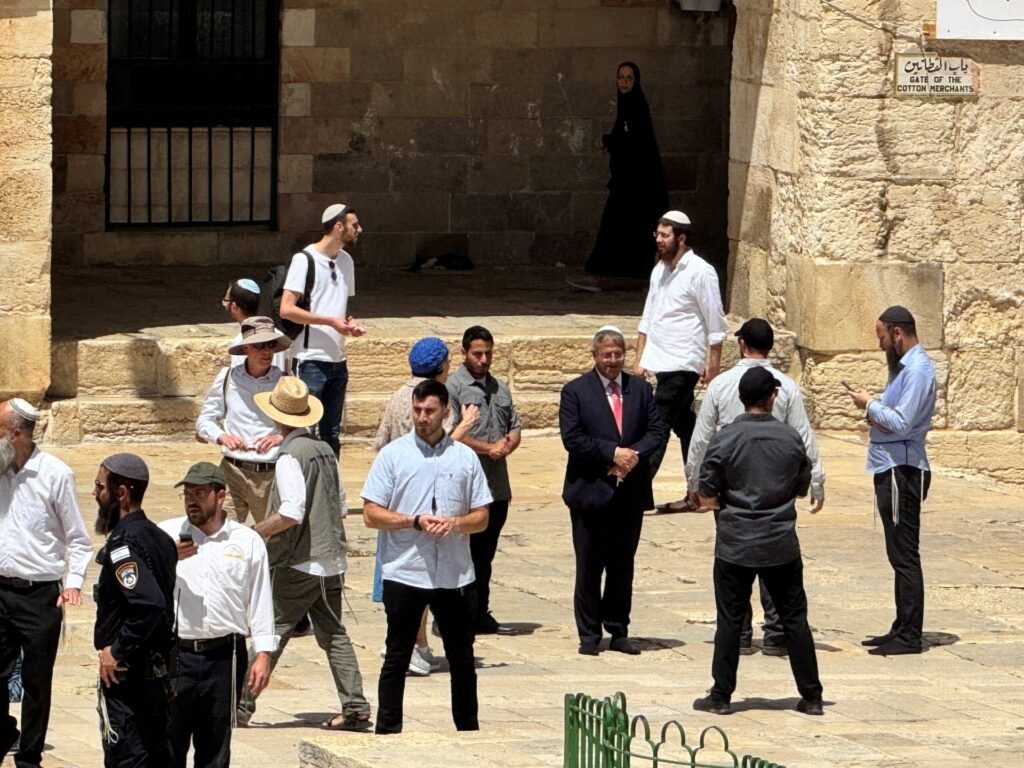
Itamar Ben-Gvir, Israel’s far-right National Security Minister, has once again sparked outrage by entering the Al-Aqsa Mosque compound in occupied East Jerusalem. On Monday, Ben-Gvir led a group of settlers, rabbis, and security officers into the site, where he performed prayers and openly called for the construction of a Jewish temple.
The move represents a direct challenge to the sensitive status quo agreement. Established in 1967, this understanding allows non-Muslims to visit the compound—Islam’s third-holiest site—but strictly prohibits them from praying there. Non-Muslim prayers are banned, though Jewish visitors are allowed to walk through the grounds.
Prayers and Calls for a New Temple
According to the Palestinian news agency Wafa, the minister and his followers performed Talmudic rituals in the eastern section of the mosque’s courtyards. Heavily armed Israeli forces secured the area during the visit, keeping watch as the group moved through the holy site.
Ben-Gvir, who leads the ultranationalist Jewish Power party, made no secret of his goals to alter the administration of the compound.
“When I was 14 years old, prayer was forbidden, and anyone who murmured was arrested. Today we see redemption,” Ben-Gvir said during the visit, according to Al Jazeera Arabic reporter Elias Karram. He went on to say that worshippers must blow the shofar, a traditional ram’s horn, and bring prayer incantations to the site.
“There must be a temple… a temple… a temple… but little by little,” the minister added.
High Tensions and Regional Backlash
The timing of the visit has added to local anxieties. Over the past several days, tens of thousands of Jewish worshippers have gathered at the nearby Western Wall for Yom Kippur prayers, which precede major Jewish holidays in September. Ben-Gvir’s presence is seen by many as a deliberate attempt to inflame religious tensions during a highly sensitive period.
For the Jerusalem governorate, the minister’s actions are a dangerous provocation. In a statement carried by Wafa, the governorate condemned the incursion as a dangerous escalation and a flagrant violation of the legal and historical status of Al-Aqsa. They warned that Ben-Gvir is trying to impose a new reality on the ground and systematically erase the site’s Islamic identity.
This is far from Ben-Gvir’s first time storming the compound. Since joining the government in late 2022, he has made several similar visits, each drawing sharp international condemnation. He has long advocated for the displacement of Palestinians and belongs to a growing settler movement that wants to build a Jewish temple where the mosque stands today.
A Pattern of Unequal Access
While Israeli authorities increasingly facilitate these visits by far-right figures, Palestinians face severe restrictions. Israeli police have allowed settlers to enter the compound on a near-daily basis since 2003, pausing only on Fridays and Saturdays.
In contrast, Palestinian access to Al-Aqsa is tightly policed and often blocked entirely. During the last Ramadan, Israeli authorities permitted only 10,000 Palestinians from the occupied West Bank—a territory home to 3.3 million people—to attend the crucial first Friday prayers. Similar restrictions blocked many from attending Eid al-Fitr prayers altogether.
The discrepancy highlights what local rights groups call a deeply unequal system of access. While high-ranking Israeli officials and settler groups enter the site under armed guard to pray, millions of Palestinians remain locked out of their holy site just miles from their homes. Any attempt to alter the administration of the site, which is officially managed by an Islamic Waqf, threatens to trigger wider regional unrest.