Epic Games Tests Unreal Engine 6 in Fortnitemares 2026
Epic Games is set to debut real-time procedural horror environments powered by Unreal Engine 6 in Fortnite’s upcoming Fortnitemares 2026 event.
The walls move. The corridors stretch into infinite darkness. One moment you are standing inside a familiar wooden cabin, and the next, the exit has dissolved into solid stone. This is not just a cheap jump scare. It is the future of game design, and it is coming to Fortnite.
For years, Fortnite’s annual Halloween event, Fortnitemares, has relied on predictable tricks. Players fought glowing zombies, wore spooky skins, and explored slightly modified versions of the existing island. But for the 2026 iteration, Epic Games is planning something far more ambitious. The developer is using the event as a live playground to showcase the capabilities of Unreal Engine 6, introducing real-time procedural horror environments that adapt to how players behave.
The Tech Behind the Terror
At the heart of this upgrade is a massive leap in how games generate environments. Typically, game designers hand-craft every room, hallway, and staircase long before a match begins. Once the map is loaded, it remains static. Epic Games wants to shatter that limitation.
Using the new architectural framework of Unreal Engine 6, the game will construct environments on the fly. The engine monitors player movement, squad size, and even the pace of combat to synthesize haunted structures in real time. If a squad lingers too long in one area, the house around them might begin to compress, closing off doors and forcing them into tighter, more claustrophobic spaces.
Epic Games Chief Technology Officer Kim Libreri discussed the technical shift during a recent presentation. “We wanted to create a space that feels alive, or perhaps more accurately, undead,” Libreri said. “With the advancements in Unreal Engine 6, we are no longer bound by static geometry. We can stream and assemble complex, photorealistic assets dynamically, responding to the players’ journey as it happens. The game is essentially composing its own horror film around you.”
Evolving Nanite and Lumen
This procedural magic relies heavily on upgrades to Nanite and Lumen, the micro-polygon and dynamic lighting systems that debuted with Unreal Engine 5. In UE6, these systems have been optimized to handle rapid geometry synthesis on a massive scale without crashing server performance.
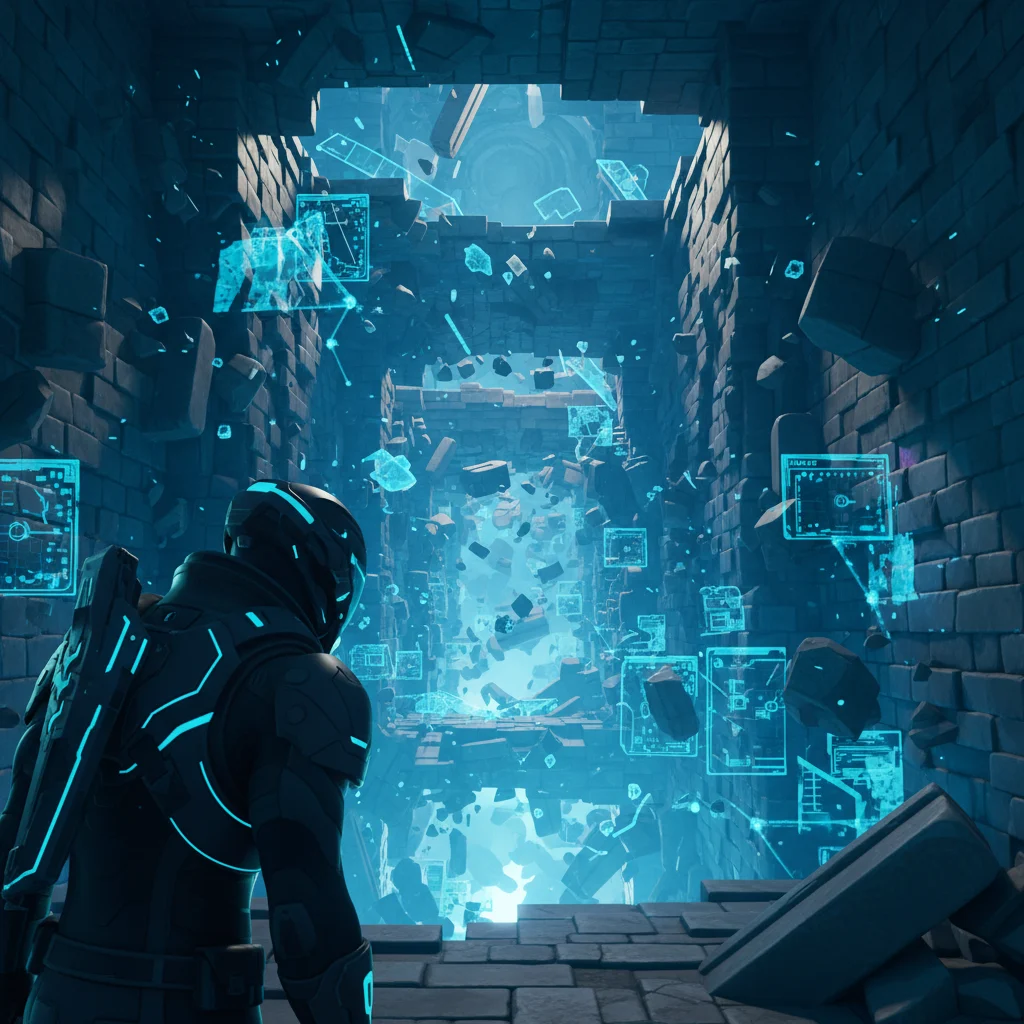
In previous versions, generating entire rooms mid-match would have caused severe stuttering or rendered the game unplayable for anyone on older consoles. Epic’s new runtime spatial processor solves this by predicting where players are looking and generating assets just out of their line of sight. Shadows cast by Lumen will stretch and twist dynamically, reacting to light sources that shift as the architecture itself warps.
The gameplay implications are massive. For the first time in battle royale history, memorizing the map won’t save you. Competitive players who rely on knowing every chest spawn and escape route will find themselves on equal footing with newcomers. The raw fear of the unknown is coming back to the genre.
A Stress Test for the Metaverse
While players will see this as a fun Halloween gimmick, industry analysts view it as a crucial stress test for Epic’s broader ambitions. The company has never hidden its desire to build a massive, interconnected digital ecosystem—often referred to as the metaverse. To achieve that scale, hand-crafting every virtual world is simply too slow and expensive.
“To build infinite worlds, you need automated tools that feel natural and seamless,” says tech analyst Sarah Jenkins. “If Epic can prove that Unreal Engine 6 can generate high-fidelity, interactive horror environments for millions of simultaneous players during Fortnitemares, they prove the tech is ready for the next generation of MMOs, virtual concerts, and digital social spaces.”
What to Expect from Fortnitemares 2026
Epic Games plans to roll out the event in mid-October. To ensure the new technology doesn’t disrupt standard competitive play, the procedural environments will be housed in a dedicated playlist called “The Shifting.”
In this mode, squads of four will enter a sprawling, Gothic estate. The objective is to find an artifact and escape, but the house will actively work against them. Paths will vanish, rooms will rotate, and the ambient audio will adjust dynamically to mimic the sound of footsteps right behind players. If the technology performs well under the pressure of millions of concurrent users, Epic plans to integrate these procedural generation tools into Fortnite Creative, allowing independent developers to build their own morphing worlds by late 2026.