Wayne County Air Initiative Targets Pediatric Asthma in Detroit
Wayne County Health Director Dr. Abdul El-Sayed launched a targeted push to protect kids in Southwest Detroit and Dearborn from winter air pollution.

For families living in Southwest Detroit and the Southend of Dearborn, the change of seasons brings more than just cold weather. It brings a familiar, tightening sensation in the chest. As winter settles over Wayne County, the air often turns thick with a mix of industrial exhaust, diesel smoke, and heavy road dust. This air does not clear easily.
This week, Wayne County Health Director Dr. Abdul El-Sayed announced a targeted public health offensive designed to shield children living in the shadow of the state’s heaviest industry. The new initiative focuses on reducing skyrocketing pediatric asthma rates in the county’s most vulnerable neighborhoods before the worst of the winter weather arrives.
“We know where the hurt is,” El-Sayed said during a press conference near the Interstate 75 corridor. “And we know who is bearing the brunt of it. It is our children. We are not going to sit back and watch another winter fill our emergency rooms with kids who simply want to breathe.”
Why Winter Makes the Air Worse
The timing of the launch is deliberate. Winter brings a meteorological phenomenon known as temperature inversions. Normally, warm air near the ground rises and disperses pollutants. But during a Michigan winter, a layer of cold air can trap industrial emissions close to the ground. This creates a stagnant, toxic blanket of air right at child-eye level.
The geographic focus of the program is highly specific. It targets Southwest Detroit neighborhoods like Boynton and Delray, alongside the Southend of Dearborn. These areas sit adjacent to a dense corridor of heavy industry, including the Marathon Petroleum refinery, the Cleveland-Cliffs steel mill, and a constant stream of international freight trucks heading toward the Ambassador Bridge.

For kids living here, the health consequences are measurable. State data shows that pediatric asthma hospitalization rates in these ZIP codes are up to four times higher than the Michigan average. It is a persistent health crisis that local advocates have pointed to for decades.
A Practical Plan for Clean Indoor Air
El-Sayed, an epidemiologist and former director of the Detroit Health Department, is keeping the county’s response practical. The initiative, funded by $2.4 million in county funds and federal grants, does not rely on long-term environmental studies. Instead, it deploys immediate resources directly to homes and classrooms.
The plan has several key parts:
Get Free $500 Amazon Gift Cards
- Free HEPA Air Purifiers: The county will distribute high-efficiency particulate air (HEPA) filters directly to families with asthmatic children living in high-risk zones. These units can scrub fine industrial soot from indoor air.
- School-Based Medical Support: Mobile health teams will visit schools in Southwest Detroit and Dearborn. They will train staff on how to handle acute asthma attacks and ensure kids have access to active rescue inhalers.
- Air Quality Monitors: The county is installing a localized network of low-cost air sensors to give neighborhoods real-time data on air quality, allowing parents to know when it is unsafe for kids to play outside.
“We cannot move these factories overnight,” El-Sayed acknowledged. “But we can clean the air inside the rooms where our children sleep, study, and play. That is something we can do right now.”
The Human Toll of Polluted Air
For parents like Maria Gutierrez, who has lived in Southwest Detroit for twelve years, the county’s intervention is long overdue. Her nine-year-old son, Mateo, was diagnosed with asthma when he was three. During the winter, his routine revolves around nebulizer treatments and anxious looks at the daily air quality index.
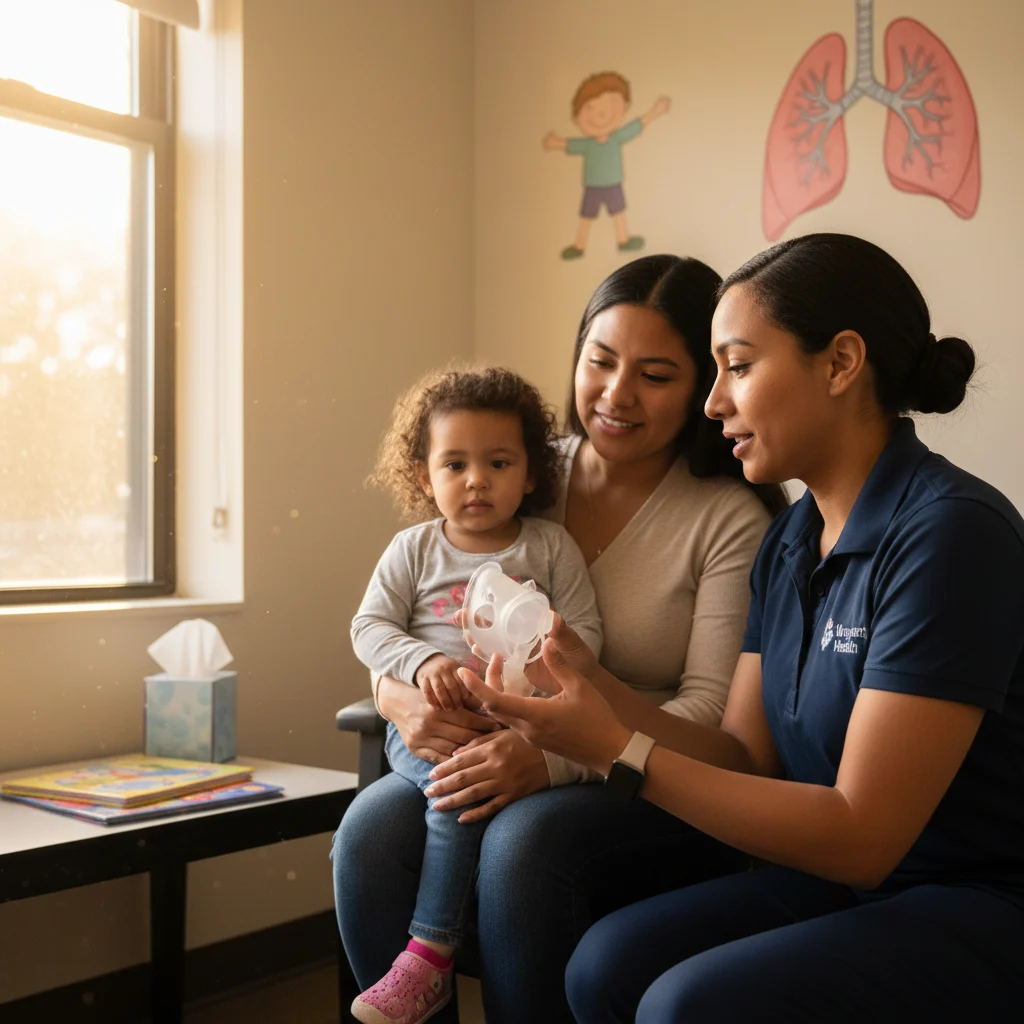
“You learn to listen to the way your child breathes while they sleep,” Gutierrez said. “Some nights you hear that whistle in his chest, and you know you won’t sleep because you might have to run to the hospital. A real filter in the house is not a luxury for us. It is a necessity.”
Local schools are also on the front lines. Teachers in these districts report keeping bins of spare inhalers in their desks. On bad air days, recess is held indoors, keeping kids cooped up inside older school buildings that often lack modern ventilation systems of their own.
Holding Polluters Accountable
While the immediate focus is on protecting children’s lungs at home, El-Sayed made it clear that the county is not letting local industries off the hook. The public health department plans to work alongside state environmental regulators to step up enforcement on businesses that violate emissions permits.
Wayne County plans to use the data collected from its new sensor network to identify specific facilities that contribute to localized pollution spikes. The goal is to build a solid, data-driven case for stricter zoning laws and heavier fines for repeat offenders.
“Pollution is not an accident of geography,” El-Sayed said. “It is the result of decades of policy decisions that placed heavy industry right next to where people live. We have to correct that balance. Protecting these kids is a matter of basic justice.”
The distribution of the first wave of air purifiers is scheduled to begin next week, prioritizing families with children who have been hospitalized for respiratory issues within the last year.