How Tracker Network’s Live UEFN Tools Are Changing Fortnite Chapter 7
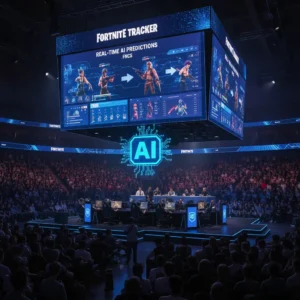
Tracker Network has launched real-time analytics for UEFN creators in Fortnite Chapter 7, giving developers instant data to optimize player retention.
The Battle for Player Retention
Fortnite has come a long way since its simple battle royale days. With the rollout of Chapter 7, Epic Games has fully committed to turning the platform into an ecosystem of user-generated games. Thousands of independent developers now build custom worlds using the Unreal Editor for Fortnite (UEFN). But building a fun game is only half the battle. Creators must keep players engaged to earn a slice of Epic’s multi-million dollar payout pool.
Historically, map makers had to fly blind. Epic’s native creator dashboard only provided delayed, basic statistics. That changed this week. Tracker Network, the platform behind the widely used Fortnite Tracker site, has launched a suite of real-time UEFN analytics tools. The launch promises to fundamentally rewrite how creators build, update, and monetize their maps.
No More Waiting Days for Data
“We were essentially guessing for years,” says Marcus Vance, a lead designer at a prominent Fortnite creative studio. Vance explains that waiting days for player retention data made troubleshooting updates nearly impossible. “If we put out a patch and players hated it, we wouldn’t know until our concurrent player count cratered. By then, it was too late to win them back. The players had already moved on to other maps.”
The new tools from Tracker Network solve this exact problem. By integrating a lightweight software development kit into their UEFN projects, creators can now monitor live telemetry. They can track player behavior as it happens.
Key Features of the New Suite
- Live Session Heatmaps: Visual overlays showing exactly where players get stuck, die, or abandon the map.
- Real-time Retention Funnels: Instant data on how long players stay in a game session and the exact moments they decide to exit.
- Dynamic Economy Tracking: Monitoring how players spend in-game gold or resources to balance the map’s economy on the fly.
- Automated Payout Estimates: Live financial forecasting based on current engagement metrics and Epic’s public payout formulas.
The real-time aspect is what makes this a massive shift. Instead of waiting for a weekly report, developers can watch live heatmaps. If a custom combat map has a bottleneck where everyone gets stuck and quits, a creator can push a hotfix within minutes.
The Economics of Chapter 7
This level of precision is crucial in Chapter 7. Epic’s payout algorithm has become incredibly sophisticated. It now heavily weighs active playtime, daily return rates, and overall engagement over simple click-through rates. Under the older systems, flashy thumbnails ruled the Discovery tab. Now, depth of play is king. Data is the new currency.
With Chapter 7, Epic is treating creators like professional game studios. Tracker Network is giving them the enterprise-grade telemetry tools to actually act like them. The dashboard doesn’t just show player counts; it provides automated payout estimations. This lets studios project their earnings dynamically. They can allocate budgets for advertising, hire voice actors, or bring on additional 3D artists based on real-time financial forecasts.
Leveling the Playing Field
For smaller, independent creators, these tools could help level the playing field. Large, venture-backed creative studios have long built their own internal tracking systems. Now, a solo developer working out of a bedroom has access to the exact same grade of analytics.
However, the launch has raised some questions. Some community members have expressed concerns about data privacy and how much player information is being tracked. Tracker Network has responded quickly, stating that all collected data is strictly anonymous, aggregate, and adheres to Epic’s strict developer terms of service.
The battle for player attention in Fortnite is fiercer than ever. As the Chapter 7 season progresses, the gap between amateur hobbyists and professional developers will likely widen. With these new real-time tools, Tracker Network has given creators the ultimate radar to navigate that shift.