iPhone 18 Pro Fortnite Review: Unreal Engine Mobile Test
We tested Fortnite on the new iPhone 18 Pro to see how Epic’s latest Unreal Engine physics updates run on Apple’s A19 Pro chip. Here is our hands-on review.
Apple’s iPhone 18 Pro is finally on shelves. While mainstream reviewers focus on camera upgrades and titanium finishes, mobile gamers have a much bigger question. How does it handle Fortnite?
It is a fair question. Epic Games recently pushed a massive update to its mobile Unreal Engine client. This patch introduces desktop-grade Chaos physics simulation and real-time dynamic lighting to compatible iOS devices. We spent a full weekend pushing the iPhone 18 Pro to its absolute limits. Our goal was simple: find out if Apple’s new A19 Pro chip delivers a console-quality experience, or if the phone simply turns into an expensive pocket heater.
The Silicon Advantage: A19 Pro and Epic Physics
Running Fortnite on mobile has always been a compromise. You usually get muddy textures, flat lighting, and physical objects that disappear the moment they break. Epic’s new Unreal Engine update aims to change that by enabling advanced physics destruction.
On the iPhone 18 Pro, this update shines. When you smash a brick wall with your pickaxe, the wall doesn’t just vanish in a puff of cartoon smoke. It crumbles. Individual stone chunks tumble to the ground, bouncing off surfaces and rolling down hills. Trees sway dynamically during gunfights, and grass flattens realistically when players slide across it.
The A19 Pro chip handles this extra computational weight surprisingly well. The custom GPU cores manage the heavy math of the Chaos physics system without turning the game into a slideshow. Water reflections look sharper too, catching the glare of the storm and muzzle flashes with impressive accuracy. It is easily the closest a mobile phone has ever come to matching the visual fidelity of a PlayStation 5 or Xbox Series S.
Framerate Stability: Pushing 120 FPS
Eye candy means nothing if your frame rate chugs during a build battle. We ran our performance tests at 120Hz with graphics settings set to “Epic” and 3D resolution maximized at 100%.
The results were impressive, though not entirely perfect:
- Early Game: Floating down from the Battle Bus, the game held a rock-solid 120 frames per second. The map rendered quickly below us with zero pop-in.
- Mid-Game: Running through open fields and looting empty POIs kept the counter locked at 120 FPS. Performance felt butter-smooth.
- Late-Game Chaos: In congested final circles with multiple players building structures and throwing explosives, we saw occasional dips. The frame rate hovered between 104 and 112 FPS.
These minor drops are practically invisible to the naked eye. Crucially, we did not experience the micro-stutters or sudden freeze-frames that plagued older iPhone models during chaotic team fights.
Thermals and Battery Life: The Real Battle
High performance usually comes at a cost: heat. To keep things fair, we tested the phone in a room kept at a steady 72 degrees Fahrenheit. We played without a case.
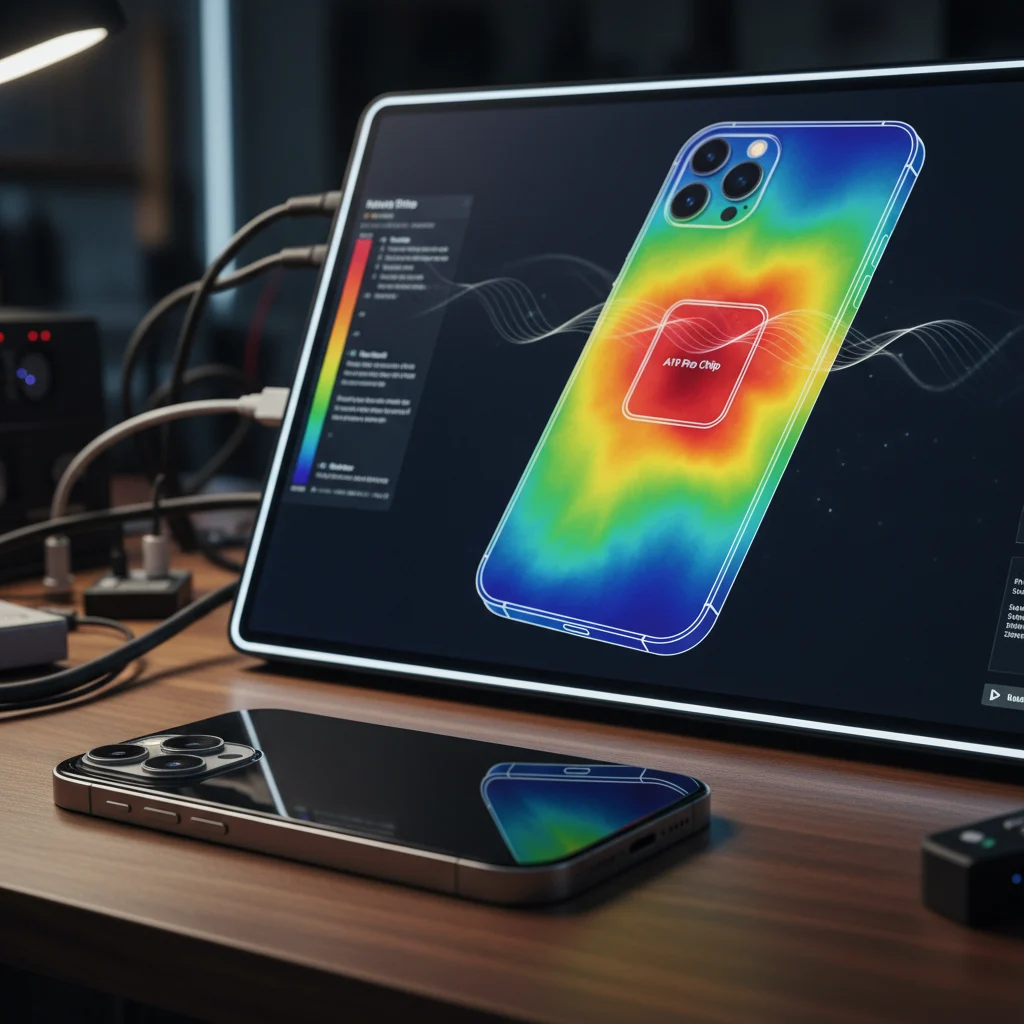
For the first twenty minutes, the iPhone 18 Pro remained remarkably cool. Apple’s redesigned internal thermal sheets seem to distribute heat much better than the previous generation. However, by minute thirty, the back glass near the camera bump felt warm to the touch. It never got uncomfortably hot, but the warmth was noticeable.
Around the forty-minute mark, the screen brightness dimmed slightly—a classic iOS defense mechanism against overheating. Even with the slight dimming, the phone maintained its high frame rates. It did not drop down to a sluggish 60 FPS lock like the iPhone 15 Pro used to do under similar stress.
Battery performance was equally revealing. We started our test session with a full 100% charge. After one hour of continuous Fortnite play at maximum settings and 120 FPS, the battery stood at 79%. Losing 21% of battery life per hour is a steep price, but it is actually a significant improvement over last year’s model, which typically drained about 26% under the same conditions. If you plan to play for more than two hours, you will still want to keep a charger nearby.
The Verdict: Is It a Console in Your Pocket?
The iPhone 18 Pro proves that mobile hardware has finally caught up with modern game engines. Epic’s latest Unreal Engine physics updates run beautifully on this hardware. The level of environmental destruction and lighting quality on display here is unmatched on any other handheld device, saving perhaps dedicated gaming PCs like the Steam Deck.
While battery consumption remains high and mild thermal throttling still exists, the raw performance gains are undeniable. For competitive Fortnite players who want to practice their builds on the go, the iPhone 18 Pro is the new gold standard.