How Fortnite Tracker’s UEFN API Is Changing Chapter 7 Scrims
A new UEFN integration by Fortnite Tracker is automating competitive matchmaking, eliminating clunky Discord bots and transforming how pros train.
For years, Fortnite’s competitive scene has fought a quiet battle against its own infrastructure. While Epic Games poured millions into seasonal prize pools, the daily grind of scrims and practice lobbies remained messy. Players relied on clunky Discord bots, manual screenshot submissions, and honor-system matchmaking. But Chapter 7 has brought a quiet revolution from an unexpected place: Tracker Network.
The launch of Fortnite Tracker’s new Unreal Editor for Fortnite (UEFN) integration is quietly shifting how the game’s best players train. By opening up direct API access to custom maps, the platform has solved one of the oldest problems in creative matchmaking: accurate, automated skill tracking.
Why Creative Matchmaking Was Broken
Since the introduction of Creative 2.0, custom maps have become the primary training ground for professional players. 1v1 arenas, box fights, and zone wars are where mechanical skill is forged. Yet, finding a balanced opponent in these modes was largely a matter of luck.
Public matchmaking queues often paired seasoned FNCS competitors with casual players. It was a waste of time for both. To get quality practice, pros had to join private Discord servers, wait for manual queue hosts, and verify their statistics through slow, external verification steps. The system was fragile. If a bot crashed, practice for the night was ruined.
Enter the UEFN Tracker API
The new integration bypasses Epic’s native limitations by letting map creators embed Fortnite Tracker’s ranking engine directly into their UEFN projects. When a player steps into a participating map, the system instantly pulls their competitive history, calculating a custom matchmaking rating (MMR) specifically for that mode.
“We wanted to build something that felt native,” says Marcus “Aero” Vance, a prominent custom map creator who helped beta-test the integration. “Before this, we were guessing. Now, we can run a matchmaking algorithm that rivals what you see in games like Valorant or League of Legends. A player walks into a portal, and they are instantly matched with someone of their exact skill level.”
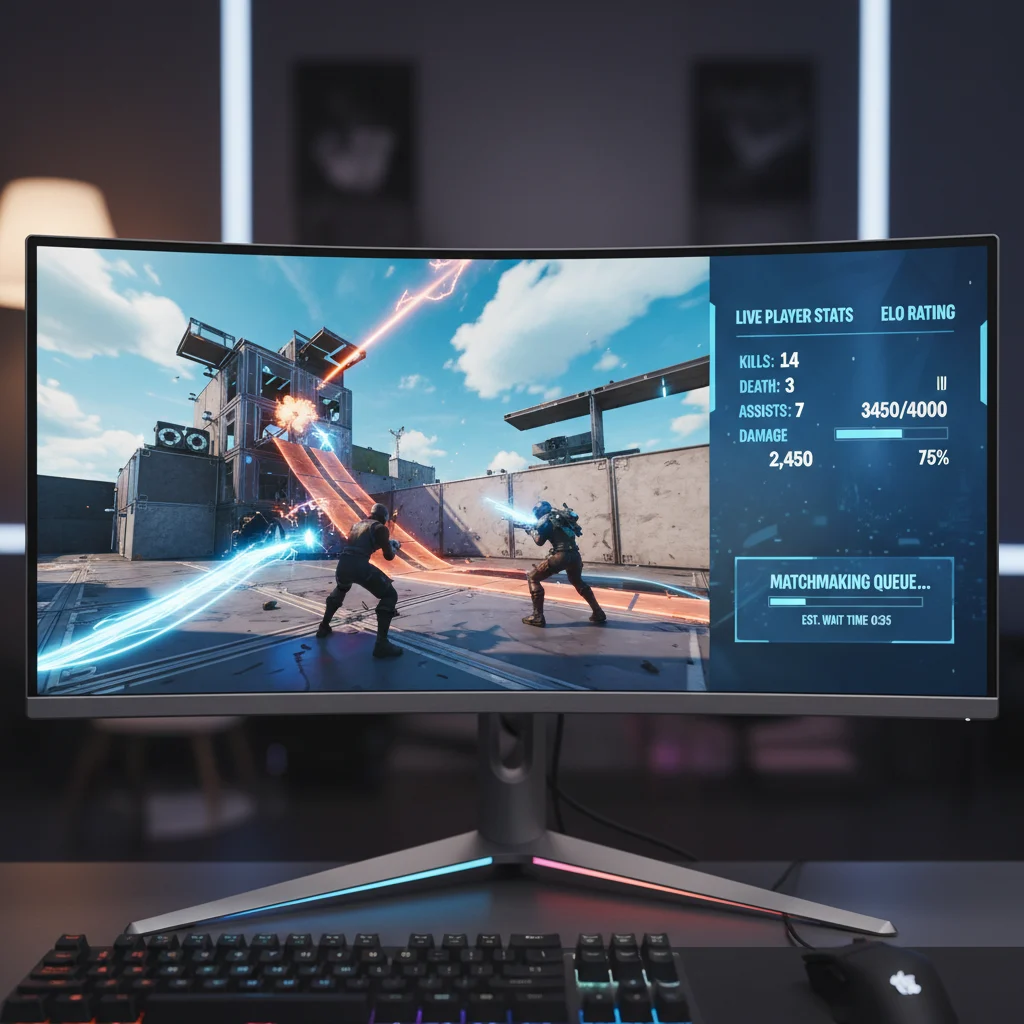
How It Works Under the Hood
The mechanics behind the integration are surprisingly lightweight but incredibly effective. Here is how the system handles a typical match:
- Instant Verification: The map queries the Fortnite Tracker API using the player’s Epic account ID.
- Dynamic MMR Calculation: The system looks at recent performance on specific training maps, not just overall Battle Royale stats.
- Automated Lobbies: Players are sorted into lobbies based on their real-time performance tier, preventing “pub-stomping” in competitive warmups.
- Live Leaderboards: Stats are sent back to Fortnite Tracker immediately after a match, updating public leaderboards within seconds.
A New Era for Aspiring Pros
The real winners of this update are the players trying to break into the professional scene. Previously, getting noticed required access to invite-only practice groups. These groups were notoriously gatekept by established players.
Now, the ladder is completely open. Anyone can load into a tracked UEFN map, climb the global leaderboard, and prove their skill with hard data. Scouts and coaches from esports organizations are already using these public UEFN leaderboards to find unsigned talent.
It also changes the stakes of daily practice. With a visible MMR on the line, players are treating creative matches with the seriousness of actual tournament games. Wasting time by throwing matches or leaving early now carries a tangible penalty to a player’s rank.
What is Next for Competitive Fortnite?
While Epic Games continues to tweak its official ranked modes, the community is already building the future of the esport. The success of this UEFN integration suggests that the next generation of Fortnite tournaments might not even take place on the main Battle Royale island.
We are already seeing third-party organizers plan high-stakes tournaments hosted entirely on custom maps with automated seeding powered by Fortnite Tracker. If Chapter 7 is remembered for anything, it might just be the moment that competitive Fortnite finally became automated, organized, and truly accessible to everyone.