How Fortnite Tracker Is Reshaping Indie Game Analytics
New real-time tools from Tracker Network are helping Fortnite creators track retention, pinpoint player drop-offs, and run maps like live-service games.

The New Frontier of UEFN Game Design
Fortnite has evolved. By late 2026, the platform operates more like an engine for independent developers than a simple battle royale game. Thousands of creators build complex, standalone experiences inside the Unreal Editor for Fortnite (UEFN). But making a beautiful map is only half the battle. Keeping players around is where the real struggle begins.
Until recently, indie developers in the UEFN ecosystem worked largely in the dark. Epic Games provided basic creator portal data, but it was notoriously slow and lacked depth. Creators often had to wait days to see how their maps performed. When player counts dropped, they could only guess why.
That changed with the release of Tracker Network’s new UEFN analytics suite. The makers of the popular Fortnite Tracker platform have rolled out real-time diagnostic tools built specifically for custom maps. Now, indie creators can track player behavior with the same precision as major studio blockbusters.
Shifting from Guesswork to Real-Time Data
The update brings features that were once the exclusive domain of enterprise game publishers. Instead of waiting for daily summaries, developers can watch player session lengths, concurrent user peaks, and matchmaking speeds update in real time. This immediate feedback loop is changing how teams patch their games.
Consider a team launching a new multiplayer shooter within Fortnite. Under the old system, if players abandoned the map after one round, the creators had no way of knowing what triggered the exit. Was the lobby too slow? Was a particular weapon overpowered?
The new toolkit solves this with granular behavioral tracking. Key features of the new analytics platform include:
- Retention Funnels: Tracks how many players return after one day, seven days, or a full month.
- Custom Event Logs: Pinpoints exactly where players quit, such as a frustrating puzzle or a confusing menu.
- Heatmapping: Visualizes where in-game deaths, choke points, and interactions happen most frequently.
- Economy Tracking: Monitors how virtual items or custom gold systems are used across sessions.
How Indie Developers Are Reacting
For small, self-funded teams, this level of insight is crucial. Marcus Vance, a developer behind the popular custom map Neon Heist, says the new dashboard changed his team’s design philosophy overnight.
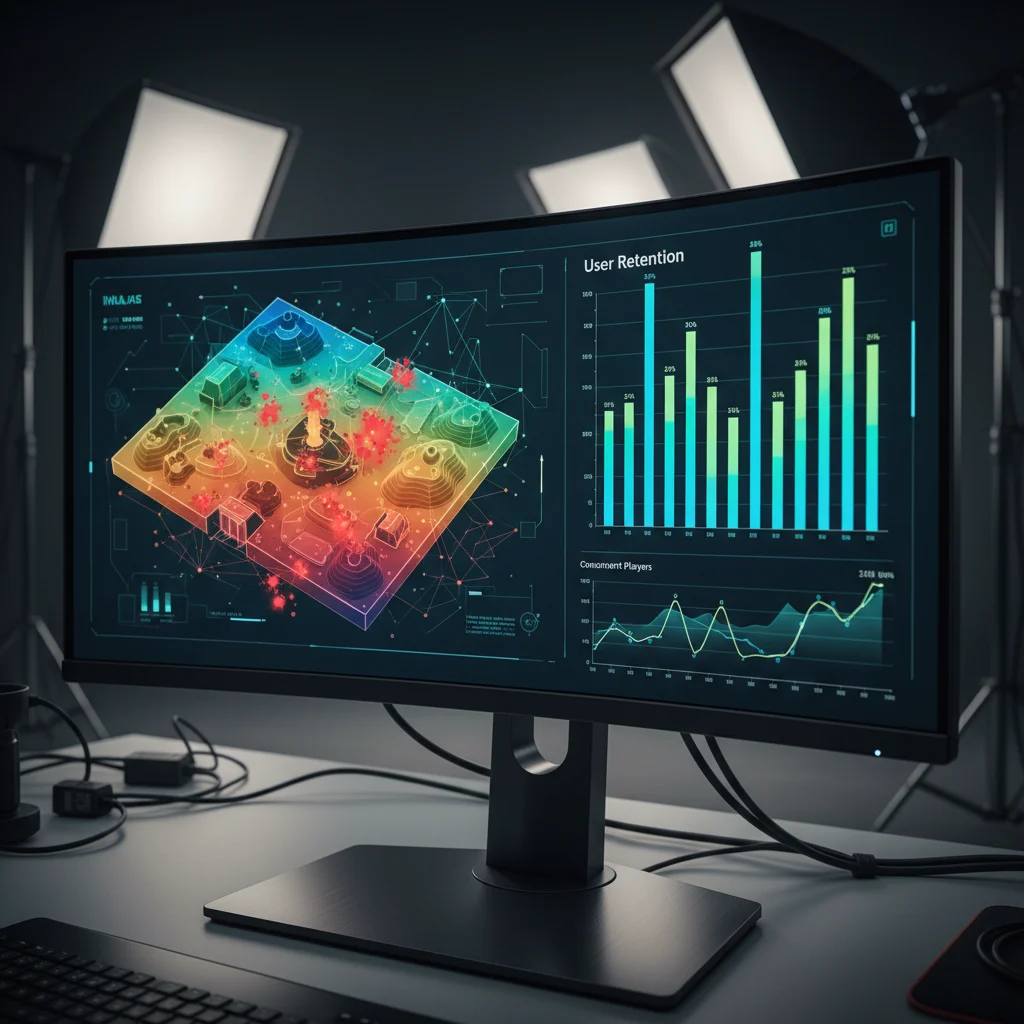
“We designed an elaborate puzzle sequence for our third level,” Vance explains. “We thought it was our best work. But when we checked the Tracker Network dashboard, we saw that 70 percent of our players quit the map within three minutes of reaching that room. They weren’t bored. They were stuck. We simplified the puzzle, patched it, and saw our day-seven retention jump by 40 percent.”
This ability to iterate quickly is vital. The Fortnite ecosystem is highly competitive. With hundreds of new maps appearing daily, a game that fails to grab a player’s attention within the first few minutes is quickly forgotten. Real-time analytics let developers fix bugs and design flaws before they destroy a map’s rating.
The Business of UEFN in Late 2026
The stakes are high. Epic Games distributes millions of dollars to creators through its engagement payout system. Map creators are paid based on how long players spend in their worlds and how often they return. In this environment, retention is quite literally money.
By democratizing high-end analytics, Fortnite Tracker is leveling the playing field. Independent developers who cannot afford custom data pipelines can now compete with larger, venture-backed studios that have entered the UEFN space.
It also changes how creators pitch their work. Some indie teams are already using their Fortnite Tracker verified dashboards to secure funding from external publishers, proving their maps have a loyal, recurring player base.
A Professionalized Ecosystem
The arrival of these analytics tools marks a turning point for user-generated content. What started as a creative mode for casual players has matured into a professional development ecosystem. As Tracker Network continues to expand its feature set, the gap between traditional game development and UEFN creation is shrinking fast.
For players, the result is simple: better-designed maps, faster bug fixes, and games that respect their time. For developers, the era of guessing is finally over.