How Fortnite Tracker’s Lobby Tool Is Shifting FNCS Strategy
A new real-time analytics tool is forcing professional players to completely rethink their strategies ahead of the 2026 FNCS Global Championship.
The competitive Fortnite scene is bracing for a massive strategic shift. Ahead of the highly anticipated 2026 FNCS Global Championship, Fortnite Tracker has rolled out a new real-time “Lobby Difficulty” tool that is completely changing how professional duos approach their matches.
For years, players relied on gut feelings, quick glances at the kill feed, or pre-game lobby skins to guess who they were up against. Now, raw data is taking over. The new feature instantly analyzes the public statistics of every player in a match, serving up a live difficulty rating before the Battle Bus even takes off.
The Math Behind the Match
The tool works by pulling real-time telemetry from public profiles in the lobby. Within seconds of loading in, it aggregates average Power Rankings (PR), recent tournament placements, and career K/D ratios. It then generates a single, easy-to-read difficulty metric.
“We wanted to level the playing field,” says David Cooper, Lead Product Developer at Tracker Network. “Historically, only the biggest esports organizations had custom-built scrapers or analysts to feed them this kind of intelligence during a live event. Now, any qualifying player can see exactly what kind of lobby they have drawn.”
W-Keying vs. Playing the Long Game
This instant data is forcing players to make crucial, split-second decisions before they land. In professional Fortnite tournaments like the FNCS, scoring is a delicate balance between placement points and elimination points. It is a high-stakes puzzle.
If the tool flags a lobby as relatively soft, with lower average PR ratings, a duo might decide to play highly aggressively to rack up easy elimination points. Conversely, if the difficulty rating spikes, the strategy immediately pivots.
“If we see a high-difficulty lobby, we are not contesting our drop spot,” explains Sarah “Aura” Jenkins, a professional player preparing for the 2026 qualifiers. “We will play edge-of-zone, avoid early fights, and focus entirely on late-game placement. It completely takes the guesswork out of our rotations.”
Koji Tanaka, a veteran competitive esports coach, believes this tool will divide the field. “The teams that can adapt their playstyle on the fly based on these metrics will dominate,” Tanaka says. “The rigid teams who only know how to play one way are going to struggle. It is no longer just about mechanics. It is about real-time adaptability.”
A Growing Debate on Competitive Integrity
While many players welcome the deeper tactical layers, the tool has sparked a fierce debate within the community. Some purists argue that real-time tracking undermines the traditional battle royale experience, where uncertainty is a core mechanic.
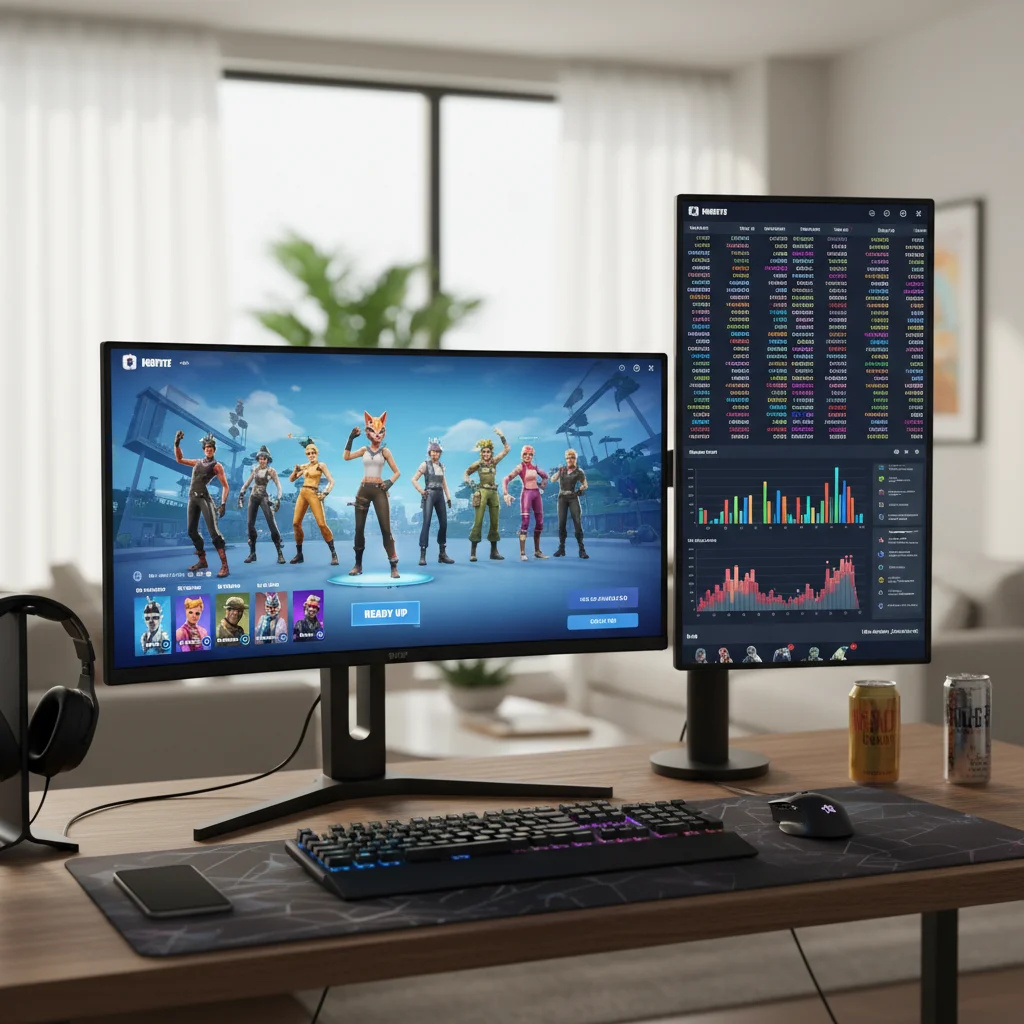
There are also concerns about the disparity between players who have a dedicated coach analyzing the tracker on a secondary monitor and solo players who must manage the interface themselves while playing.
Epic Games has not yet issued an official stance on the new tool, though it operates entirely within the publisher’s public API guidelines. Because it only accesses publicly available data, it does not violate current terms of service. Still, tournament organizers are watching closely to see if it shifts the competitive meta too drastically.
The Road to the 2026 Championship
With millions of dollars on the line at the 2026 FNCS Global Championship, every minor advantage counts. Teams are already integrating the Lobby Difficulty tool into their daily scrims to build muscle memory around the data.
As the qualifiers draw closer, one thing is certain: the era of blind drops is over. The duos who stand on the podium in 2026 will likely be the ones who mastered not just the build-fights, but the spreadsheets behind them.