Fortnite Tracker Launches Analytics as Custom Maps Surge
Tracker Network has rolled out a new analytics platform for UEFN creators as custom maps pull in more active players than classic Battle Royale.

The balance of power inside Fortnite has officially shifted. For years, the battle bus was the center of the game’s universe. Millions of players dropped onto the island to build, shoot, and fight for a Victory Royale. Now, they are doing something else. They are playing custom games built by teenagers, indie studios, and amateur developers.
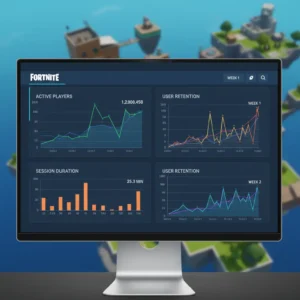
These custom maps, built using the Unreal Editor for Fortnite (UEFN), have quietly taken over. In fact, user-created modes now regularly draw more active players than Epic Games’ own core Battle Royale modes combined. To help these independent creators make sense of this massive influx of players, Tracker Network has stepped in. The company behind Fortnite Tracker has officially launched a dedicated analytics suite specifically for UEFN creators. This new platform aims to give map makers the same deep data that professional game studios rely on.
A New Era of Data for Fortnite Creators
Before this launch, creators had to rely on Epic’s basic dashboard. It offered some details, but lacked real-time depth. Tracker Network’s new tool changes that. It tracks map performance, player retention, and active concurrent players across thousands of custom islands. The tool offers several key features:
- Real-time player counts showing exactly how many people are playing a map at any given second.
- Historic trend graphs to track whether a map is growing or losing steam over weeks and months.
- Comparative leaderboards that rank the top-performing creator maps across the entire Fortnite ecosystem.
- Detailed category breakdowns, allowing creators to see which genres—like deathruns, prop hunts, or practice arenas—are currently trending.
For creators, this is about more than just vanity. It is about survival and revenue.
The High-Stakes Economy of UEFN
Epic Games changed the industry when it introduced Creator Economy 2.0. Under this system, Epic distributes 40% of Fortnite’s net item shop revenue back to eligible map creators. The payouts are based on player engagement, retention, and how many new players a map attracts.

It is a lucrative business. Top creators are reportedly making millions of dollars a year. But with high rewards comes fierce competition. Thousands of new maps launch every single week. Standing out is incredibly hard. By using Fortnite Tracker’s new analytics, developers can spot trends early. If a creator notices a sharp drop-off in player count on Tuesday afternoons, they can adjust their update schedule. If they see a rival map surging, they can analyze what that map is doing right. It turns game creation from a guessing game into a precise science.
By the Numbers: The Rise of Custom Modes
The shift in player behavior is staggering. On any given weekend, the total number of players in custom maps routinely surpasses one million concurrent users. This often dwarfs the player counts for standard Battle Royale, Zero Build, and Ranked modes combined.
Epic Games originally launched Fortnite as a single-player PvE game before pivoting to Battle Royale in 2017. Now, the game is undergoing its third major evolution. It is no longer just a game. It is a platform, much like Roblox or Minecraft, where Epic acts as the host and the community builds the content.
The Broader Industry Shift
This transition highlights a wider trend in the gaming industry. Players want agency. They do not just want to play a developer’s pre-made levels; they want to experience worlds built by their peers. Epic Games CEO Tim Sweeney has long spoken about his vision for a connected virtual space where users generate the experiences.
UEFN, which launched in March 2023, was the catalyst for this vision. By giving creators access to the same Unreal Engine tools used by AAA developers, Epic democratized game development. Now, a small team of three people can build an experience that rivals a multi-million-dollar game in popularity. But as these indie teams grow into actual businesses, they require robust infrastructure. Fortnite Tracker’s analytics suite fills a massive void. It provides transparency in an ecosystem that has historically been a black box. Creators can now pitch their maps to brands with verifiable traffic data, opening up new avenues for sponsorships and in-game advertising.