How Fortnite Tracker’s AI Combat Coach is Rewriting the FNCS Playbook
Pro players are discarding traditional VOD reviews for real-time AI telemetry ahead of the $4.5 million FNCS 2026 Invitational.
The New Prep Work
The road to the Fortnite Champion Series (FNCS) 2026 Invitational looks completely different this time around. It is not because of map overhauls or weapon balance updates, either. The real shift is happening quietly on the screens of coaches and analysts. Fortnite Tracker’s new AI-powered ‘Combat Coach’ telemetry system is reshaping how the world’s best players prepare. It is turning the competitive scene on its head.
For years, high-level training meant sitting through hours of video recordings. Coaches would painstakingly pause frame by frame to see where a rotation went wrong. Now, the machine does it instantly. Combat Coach ingests raw match files and spits out highly detailed telemetry. It tracks everything from build-to-edit delays to micro-decisions made during high-pressure box fights.
The Coach’s Perspective
“We used to spend half our night arguing about positioning during mid-game rotates,” says Daniel “DOS” Ramirez, a veteran coach preparing two duos for the upcoming tournament in Paris. “Now, I just open the dashboard. The AI highlights exactly where our movement was inefficient. It even calculates our survival probability based on neighboring teams’ inventory predictions. It saves us hours of tedious work.”
The tool works by comparing player telemetry against a vast database of professional match history. It doesn’t just show what happened. It explains why. For example, if a player consistently loses off-spawn fights at a specific point of interest, the software points out subtle flaws in landing angles or early-game material harvesting paths.
Refining the Milliseconds
It is not just coaches getting obsessed with the numbers. Top players are using the data to tweak their mechanical habits. Marcus “Vortex” Lindstrom, who qualified for the Invitational last month, noticed a pattern in his defensive building.
“The tracker showed that when I get pressured from the top-right, my crosshair flick is off by about three pixels. That minor error was costing me a shield crack every third game. You can’t see that with the naked eye,” Lindstrom explains.
Before Combat Coach, third-party scrims were chaotic testing grounds. Now, they are data mines. Almost every major team in the European and North American regions has integrated the tool into their daily custom lobbies. They can instantly see which landing spots are too crowded, or which rotation paths are death traps during the third zone pull.
A Wealth of Spatial Data
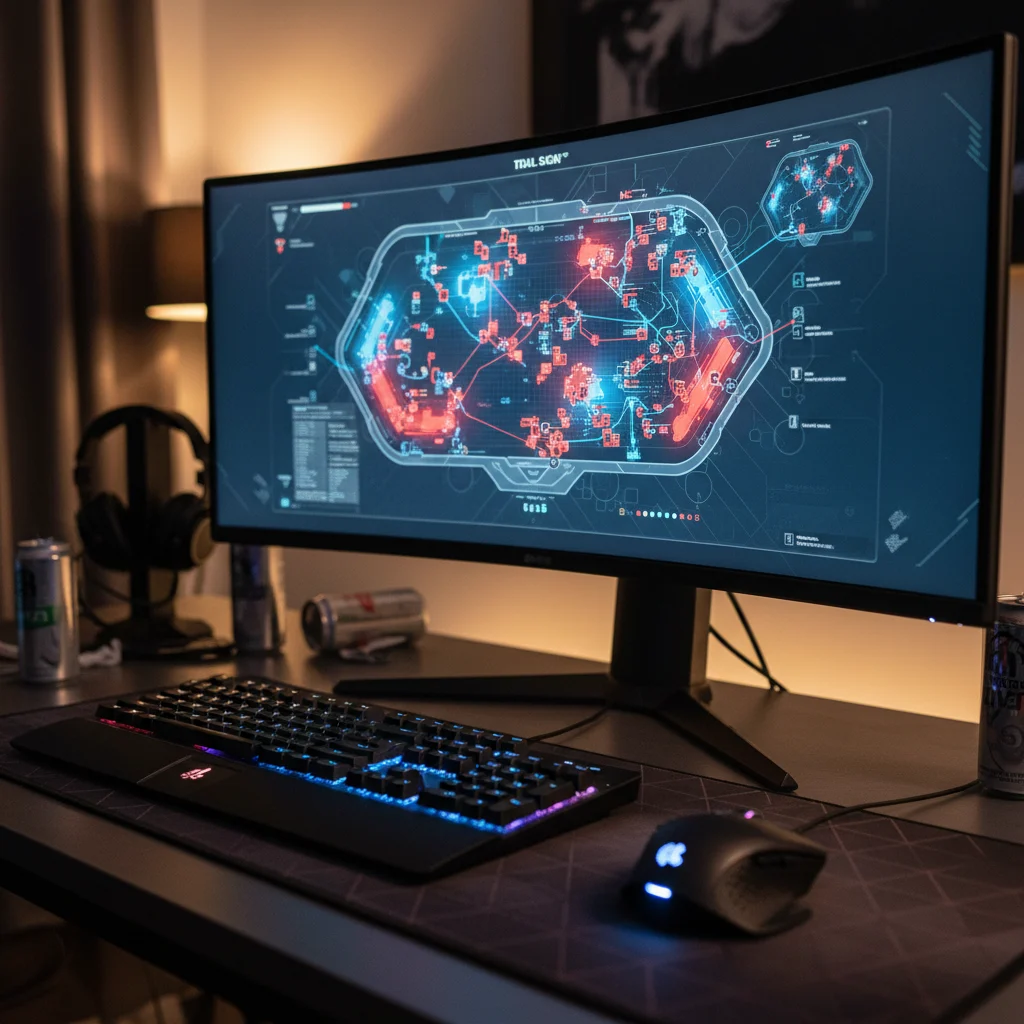
The dashboard itself looks less like a gaming app and more like financial analysis software. Sleek graphs map out utility usage. A 3D interactive map allows users to scrub through a timeline of the match, displaying player positions as moving vectors with color-coded threat levels.
According to Sarah Jenkins, Lead Data Scientist at Tracker Network, building this engine required training models on over five million competitive match frames. “We wanted to go beyond simple statistics like K/D ratios or average placement,” Jenkins says. “We wanted to quantify spatial awareness and mechanical efficiency. The response from the pro community has been overwhelming, but we are just scratching the surface.”
The Human Versus the Machine
With a staggering $4.5 million prize pool on the line this year, every single pixel counts. The FNCS 2026 Invitational will feature the top 50 duos globally. In a lobby this stacked, the mechanical skill level is almost identical. The winner won’t necessarily be the fastest builder. It will be the team that makes the fewest tactical mistakes. That is where deep data comes in.
Still, the introduction of Combat Coach is causing some anxiety. Some purists argue that relying heavily on AI telemetry might sanitize the organic, chaotic nature of Fortnite. They worry it could turn the game into a chess match where players memorize optimal paths rather than relying on instinct.
Others see it as the natural evolution of esports. If traditional athletes use advanced biomechanics and heatmaps to perfect their game, why shouldn’t esports players do the same? As teams pack their bags for Paris, laptops are glowing with color-coded heatmaps and telemetry charts. The era of guessing is over. The FNCS 2026 champion might still raise the trophy on stage, but the victory will have been engineered weeks prior, deep inside the data.