How Fortnite Tracker Chapter 7 Tools Are Rewriting the Meta
Fortnite Tracker’s new storm prediction and real-time lobby scouting tools are changing how competitive players rotate and play in Chapter 7.
Fortnite Chapter 7 has completely reset the playing field, but the biggest shift this season isn’t a new weapon or a map gimmick. Instead, it is happening on second monitors. Tracker Network, the company behind the widely used Fortnite Tracker platform, recently rolled out a suite of real-time match analytics and storm prediction tools. For competitive players, the launch has instantly divided the community into those who use the data and those who get left behind.
The update, which went live alongside the new chapter’s launch, leverages advanced telemetry data to give players a massive strategic edge. By analyzing live match states, the tool offers unprecedented insights that were previously restricted to post-game reviews. Now, that data is served on a silver platter while the match is still active.
The Math Behind the Storm
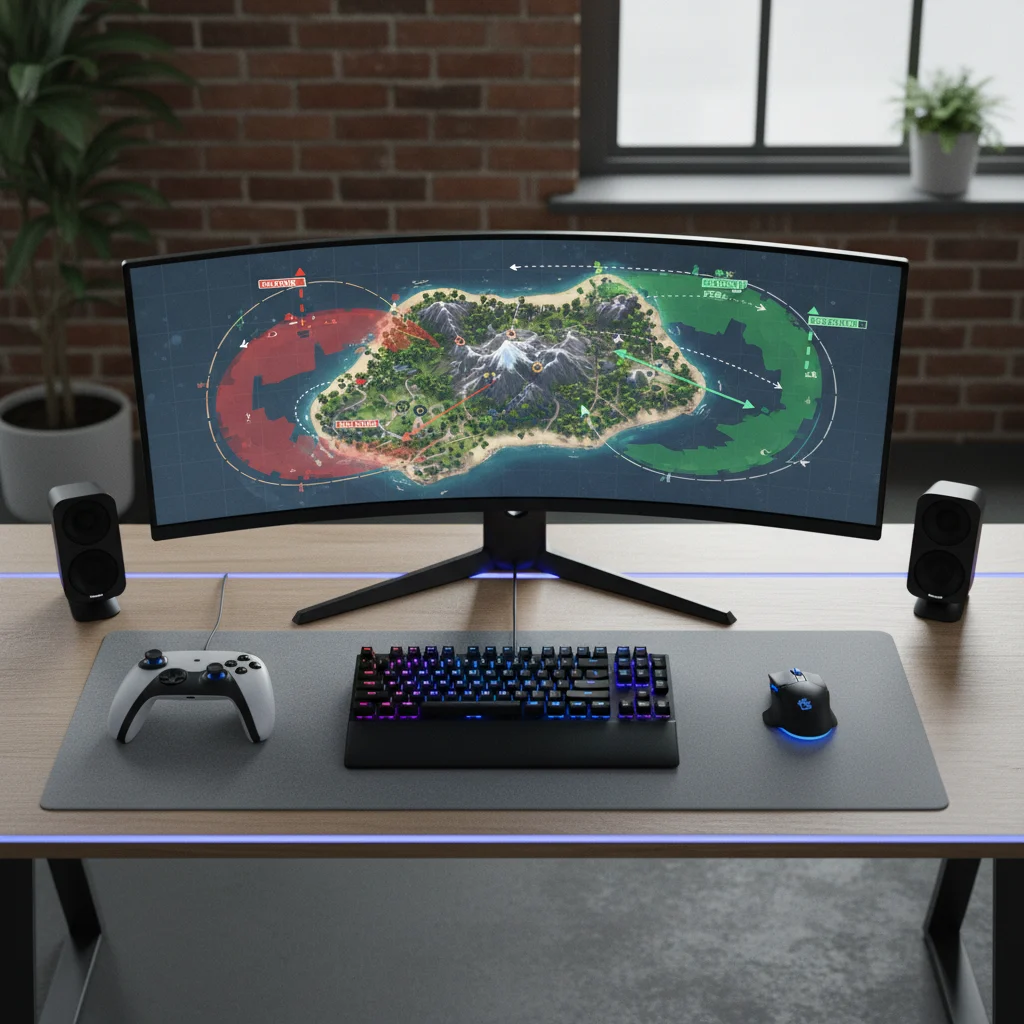
For years, predicting the storm’s next move was a mix of intuition, memorized patterns, and luck. Chapter 7 changes that. Fortnite Tracker’s new tool processes live lobby data and historical circle algorithms to give players a heat map of likely storm pulls. It does not offer a 100% guarantee—Epic Games still keeps its exact RNG under wraps—but the tool calculates probability percentages that are scary accurate.
During the mid-game, when fifty players are packed into a tiny zone, knowing whether a pull is 80% likely to go north or south dictates everything. “It completely changes how we approach dead-side rotations,” says Marcus “Tectonic” Vance, a veteran competitive coach. “Instead of guessing and wasting precious movement materials, teams are positioning themselves five minutes ahead of the circle. It has turned chaotic end-games into a chess match.”
The tool uses a visual overlay that overlays a semi-transparent grid on the mini-map. This grid highlights high-probability landing zones for the next phase, color-coded from green to red. Players can quickly glance at the map and decide whether to dig in and hold their ground or initiate an immediate rotation to a safer, less congested sector.
Real-Time Lobby Scouting
Beyond weather forecasting, the new overlay tracks who is in your game in real time. As soon as the battle bus launches, the software scans public API data to list every player in the lobby, their average placement this season, and their preferred drop spots. If a lobby is suddenly stacked with aggressive “w-keyers,” smart players know to play defensively. If a rival duo drops at their favorite spot, they get an instant heads-up before their gliders even deploy.
This level of scouting used to require a dedicated analyst staff. Now, any aspiring pro with a free overlay has access to the same tier of information. The tool even tracks live elimination feeds to calculate which high-tier lobby threats are still alive, allowing players to avoid dangerous fights or target weakened opponents.
For example, if the software flags that the lobby’s top-ranked duo has just lost a member, aggressive teams can use the live map to pinpoint where that fight occurred and move in to clean up the surviving player. It turns passive tracking into active, aggressive hunting.
Is It Fair Play?
With such a massive influx of data, the competitive community is locked in a fierce debate over competitive integrity. Some purists argue that real-time overlays ruin the spirit of battle royale games, where adaptability and survival instincts should reign supreme.
“There is a fine line between analytics and hand-holding,” tournament organizer Elena Rostova explains. “If an external program is telling you exactly when and where to rotate, it dilutes the raw skill that makes Fortnite esports so thrilling to watch. We are watching players look at their tracker overlay more than the actual game screen.”
Epic Games has yet to issue an official statement targeting these specific tools. Because Fortnite Tracker relies strictly on public API data and does not modify game files, it technically complies with current terms of service. However, rumors are already circulating among pro players that Epic might restrict live API access during official FNCS tournaments to level the playing field.
What This Means for the FNCS Meta
Whether you love it or hate it, the data-driven meta is here to stay. In the upcoming FNCS qualifiers, expect to see much slower, more calculated early games. Spotting early storm tells means teams can secure center-zone houses with minimal conflict, leading to incredibly dense end-games with high player counts.
This shifts the skill gap. Mechanics alone are no longer enough to carry a player to the top tier. Success in Chapter 7 requires data literacy. The best players will not just be those with the fastest edits, but those who can interpret a live analytics screen in the middle of a chaotic build fight.