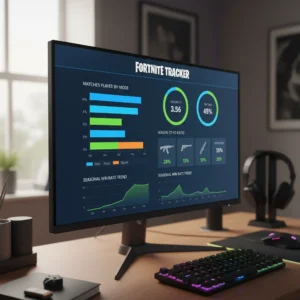
Fortnite Tracker Rebuilds Leaderboards After Epic Games API Update
Epic Games’ new security rules force Fortnite Tracker to overhaul its competitive leaderboards just before the 2026 FNCS Global Championship.
For nearly a decade, Fortnite Tracker has been the ultimate destination for competitive players. If you want to know who is dominating the European cash cups, you check the site. If you need to verify a rising star’s tournament history, the database has the answers. But that era of effortless data access is coming to an abrupt end.
Epic Games is locking down its backend. A sweeping security update to the publisher’s API has forced Tracker Network, the platform behind Fortnite Tracker, to completely overhaul its database and leaderboard systems. It is a massive technical headache. Worse yet, it is happening right as the competitive community gears up for the high-stakes 2026 FNCS Global Championship.
The End of Easy Scraping
For years, third-party sites pulled match statistics and player profiles using relatively open API endpoints. This allowed trackers to build massive archives of player performance, power rankings, and regional leaderboards without requiring much input from the players themselves. It was seamless, fast, and incredibly detailed.
Epic’s new security measures change the rules of the game. The developer is restricting unauthorized data harvesting to protect user privacy and secure its platform from automated bots. While these changes make Epic’s ecosystem safer, they effectively blindside third-party services that rely on constant, open data streams.
Tracker Network confirmed that the old ways of pulling leaderboards no longer work. To keep the site running, their developers have to completely restructure how they gather and display competitive information. It is a race against time, and the stakes are incredibly high for the competitive scene.
Why the timing couldn’t be worse
The timing of Epic’s security push has sent shockwaves through the professional Fortnite community. The road to the 2026 FNCS Global Championship is already underway, and millions of dollars are on the line. Teams, coaches, and analysts rely heavily on tracker data to prepare for matches.

Scouting is a massive part of modern esports. Without reliable tracker data, the competitive ecosystem faces several major disruptions:
- Scouting is crippled: Coaches cannot easily analyze rival drop spots, rotation patterns, or engagement success rates.
- Power Rankings are frozen: The community-run Power Rankings (PR) system, which determines player seeds and reputation, is temporarily offline or inaccurate.
- Sponsorships are affected: Up-and-coming players use verified tracker statistics to secure contracts with esports organizations.
Shifting to an Authenticated Model
To survive the API lockdown, Fortnite Tracker is moving toward a highly secure, opt-in system. Instead of automatically tracking every account on Epic’s servers, the platform will rely on user authentication. Players will likely need to link their Epic Games accounts securely to the tracker via OAuth to consent to data sharing.
There is a silver lining to this forced transition. While an authenticated model requires more effort from players, it drastically reduces the number of fake accounts, stat spoofing, and smurf profiles on the leaderboards. The resulting data will be cleaner, more accurate, and much harder to manipulate.
“We are working as fast as we can to adapt to Epic’s new infrastructure,” a Tracker Network representative shared in a recent community update. “Our goal is to ensure the competitive community has the tools they need before the major FNCS events kick off, but we need players to cooperate with the new verification steps.”
What happens next?
The transition period will likely be bumpy. Fortnite Tracker has urged players to stay patient as they deploy the new system in phases. Casual players might notice missing stats or broken profile pages over the coming weeks, but the development team is prioritizing competitive rosters and official tournament leaderboards first.
Epic Games has not publicly commented on the specific API changes, but the move aligns with a broader industry trend. Major publishers are increasingly clawing back control of their game data to protect user privacy and prevent commercial scraping. For Fortnite’s competitive ecosystem, the era of open data is over, and the era of secure, verified competition has officially begun.