Fortnite Debuts Disney Horizon Storefront Amid Pricing Backlash
Epic Games has integrated a permanent Disney storefront inside Fortnite, but fans are pushing back against the soaring cost of virtual items.
Fortnite has evolved far beyond its humble battle royale roots, transitioning into a sprawling digital hub where players meet, hang out, and shop. That transformation reached a major milestone this week. Epic Games officially rolled out ‘Disney Horizon,’ a permanent virtual storefront embedded deep within the Fortnite Item Shop.
This is not a temporary promotional crossover. It is a permanent fixture. For the first time, players can browse dedicated virtual aisles filled with outfits and accessories from Disney, Pixar, Marvel, and Star Wars at any hour of the day. Yet, the grand opening has not been entirely celebratory. Instead, it has reignited a fierce debate over the soaring prices of virtual real estate and digital cosmetics.
The $1.5 Billion Connection
The arrival of Disney Horizon is the first physical manifestation of a massive deal struck earlier this year. Disney invested $1.5 billion into Epic Games, promising a multi-year project to build an expansive, persistent universe connected to Fortnite.
Until now, collaborations were fleeting. Popular skins like Captain America or Darth Vader would appear in the store for a few days, then vanish for months. This artificial scarcity drove player engagement. Now, the permanent storefront changes the dynamic entirely.
The new shop features several distinct zones:
- The Marvel Vault, housing classic and modern superhero gear.
- The Star Wars Cantina, featuring Jedi robes and alien cosmetics.
- The Pixar Playroom, showcasing animated favorites.
The Rising Cost of Virtual Identity
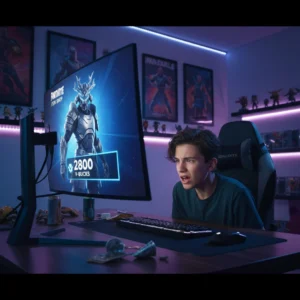
While the convenience of a permanent catalog appeals to many, the prices have shocked casual players. Individual character skins in the Disney Horizon shop generally cost between 1,500 and 2,200 V-Bucks. Full character bundles, which package together glider skins, custom harvesting tools, and unique emotes, are retailing for as much as 4,000 V-Bucks.
In real-world currency, that means a single digital outfit package can cost upwards of $32 USD. For many in the gaming community, these prices have crossed a threshold from fun microtransactions into luxury pricing.
“We are witnessing a shift in how these digital worlds are valued,” explains Michael Aris, a seasoned video game industry analyst. “Epic is no longer just selling pixels. They are establishing premium virtual real estate. When you price a digital skin at thirty dollars, you are targeting a specific tier of consumer, leaving casual players behind.”
Community Backlash and the Value Debate
The sticker shock quickly dominated gaming forums and social media. On Reddit, threads dissecting the pricing model gathered thousands of comments within hours of the shop’s launch.
The primary point of frustration is the lack of digital ownership. Players point out that if Epic Games ever shuts down the Fortnite servers, or if a user’s account is banned, those expensive digital goods disappear forever.
“It is hard to justify spending real-world money on something you don’t actually own,” says longtime player Marcus Vance. “Back in the day, twenty or thirty dollars bought you a complete, standalone game expansion. Today, it buys you a cape and a glowing sword that you can only use inside one platform.”
Epic Games has historically defended its pricing structure, citing the high licensing fees associated with working with external entertainment giants. They also emphasize that all items sold in the store are entirely cosmetic. They offer no competitive advantage in the game, meaning players do not have to pay to win.
A Blueprint for the Future
Despite the online grumbling, the storefront is busy. The allure of running around as iconic characters remains a massive draw, particularly for younger players who view their Fortnite avatars as a primary form of self-expression.
As the lines between physical and digital spaces continue to blur, the success of Disney Horizon will likely dictate how other major brands enter the space. If players keep buying, these high prices will become the new industry standard. Fortnite may have started as a simple survival game, but it is fast becoming the world’s most expensive digital shopping mall.