How Chapter 7 Movement Rewrote the FNCS 2026 Meta
Chapter 7’s radical new movement mechanics completely transformed the FNCS 2026 Global Championship, turning the endgame into a high-speed aerial battle.
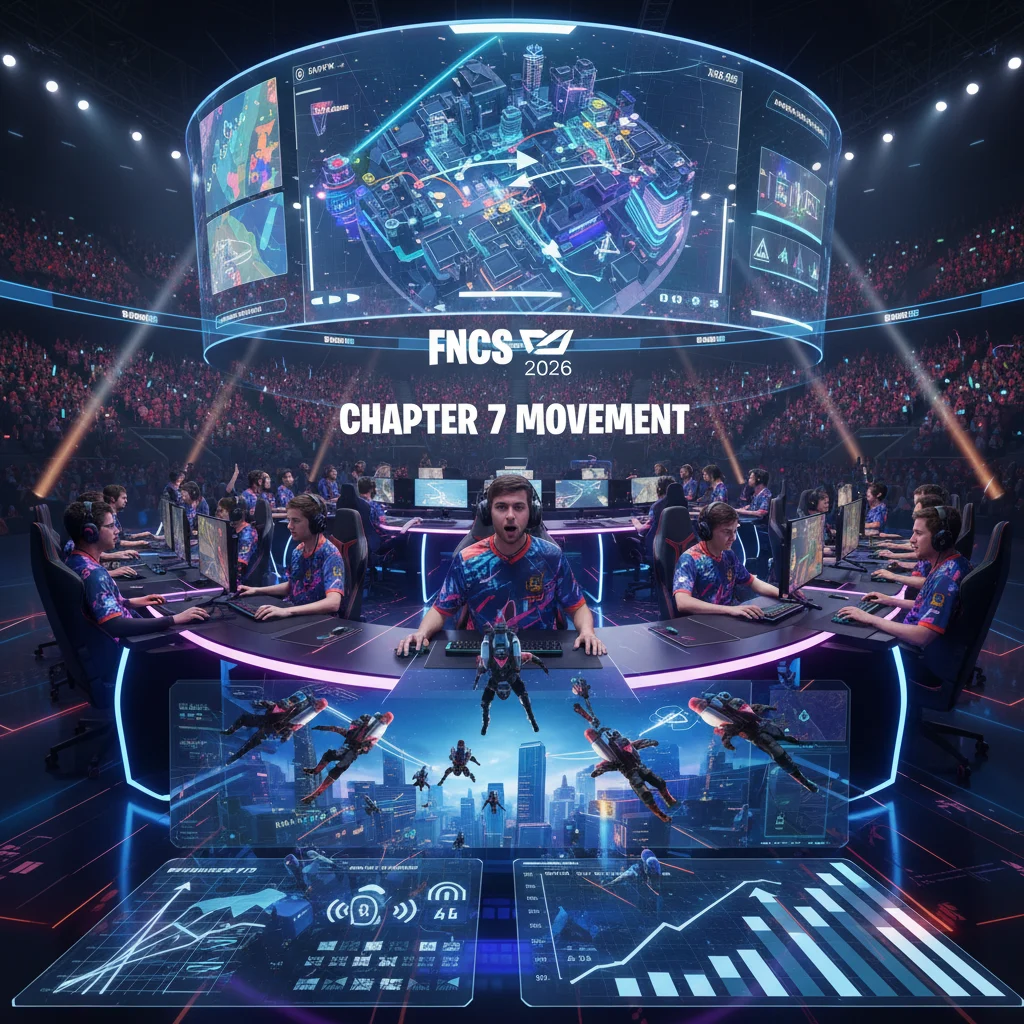
A New Era of Kinetic Combat in Copenhagen
The stage was set in Copenhagen for the FNCS 2026 Global Championship. Fans expected the usual masterclass in piece control and box fighting. What they got instead was a high-speed clinic in momentum. The introduction of Chapter 7’s radically overhauled physics and movement engine did not just tweak the competitive meta. It completely shattered it.
For years, top-tier Fortnite relied on a familiar rhythm. Players harvested materials, established defensive layers, and rotated through congested lobbies using tight, resource-heavy tunnels. Chapter 7 threw that playbook out the window. With the addition of omnidirectional vaulting and momentum-retaining slides, the world’s best players had to completely rethink how they navigate the map. It was faster, highly vertical, and incredibly punishing for those who stuck to old habits.
The End of the Classic Tunnel
In previous seasons, rotating during the late-game moving zones was a slow, expensive endeavor. Teams burned through hundreds of pieces of wood, stone, and metal just to stay safe from lobby focus. At the 2026 Global Championship, however, the top duos showed how the new mechanics allow for incredibly cheap rotations.
By chain-linking the new directional slide-boost with low-ground builds, players could slide-cancel across 40-meter gaps in seconds. This move used a fraction of the materials traditionally required. It changed everything.
“If you are still tunneling the old way, you are basically throwing,” said veteran pro Cooper during a post-match interview. “We realized in scrims that you can use the new momentum-vault to launch yourself over opponent boxes without placing a single ramp. It saves your mats for the absolute final pull, which is where the game is won now.”

High Ground is No Longer a Safe Haven
Historically, securing the ultimate high ground in the fifth or sixth zone meant a near-guaranteed path to victory. From above, teams could easily rain down pressure on the struggling lobby below. But Chapter 7’s vertical wall-climbing and ledge-launching mechanics have made high ground more vulnerable than ever.
During Match 4, the reigning champions Peterbot and Pollo demonstrated just how risky camping on height has become. Finding themselves trapped on the low ground with dwindling builds, they utilized a coordinated double-wall bounce. The maneuver allowed them to scale a five-story metal tower in under three seconds, catching the team holding height completely off guard.
Key shifts observed during the tournament included:
- Reduced Material Consumption: Average material counts heading into the final moving zones were up by 35% compared to last year.
- Dynamic Height Contested: High ground changed hands an average of four times per match, a massive increase from previous championships.
- Aggressive Low-Ground Play: Teams used the momentum-boost to dive-tackle opponents out of boxes, forcing rapid close-quarters engagements.
Coaching Staffs Scrambled to Adapt
The sudden shift left analytical teams and coaches working overtime. In the weeks leading up to the tournament, analysts realized that traditional rotation paths were completely obsolete. The new physics allowed players to survive in zones that would have been instantly fatal in Chapter 6.
Coaches had to train their players to track targets moving at unprecedented speeds. Tracking a player sliding, vaulting, and maintaining momentum through the air requires a different level of aim correction. The teams that adjusted their aim-trainer routines to account for these high-velocity trajectories dominated the leaderboard.
What Lies Ahead for Competitive Fortnite
The FNCS 2026 Global Championship will go down as the tournament where Fortnite became truly three-dimensional. The old, slow box-up meta has been replaced by a fluid, parkour-heavy style of play that rewards reflex and spatial awareness over pure editing speed.
As the competitive community prepares for the upcoming season, one thing is certain. The gap between those who can master the physics of Chapter 7 and those who rely on classic building is only going to widen. The game has changed forever, and there is no looking back.