How AI Is Changing Fortnite Esports Scouting Forever
A new AI tool from Fortnite Tracker is shaking up how professional esports teams scout talent for the 2026 FNCS Global Championship.

The New Era of Player Scouting
Competitive Fortnite has always been a bit of a gamble for team managers. One week a teenager wins a solo cup, gets signed to a major esports organization, and then completely vanishes from the leaderboards. It is a familiar, expensive story.
But a new tool from Tracker Network, the creators of Fortnite Tracker, is changing how teams find and sign players. By using deep-learning models to analyze millions of matches, the platform’s new AI forecasting tool is giving scouts a glimpse into the future. It predicts how players will perform months down the line, right in time for the 2026 FNCS Global Championship.
Reading Between the Stats
Traditional scouting relies heavily on obvious metrics. Kills, average placement, and total earnings. But those numbers do not tell the whole story. A player might get lucky with storm zones or find high-tier loot several games in a row.
The new AI tool looks deeper. It analyzes micro-behaviors. How quickly does a player edit walls when their health is low? How efficiently do they use materials during late-game chaos? How do they handle storm surge pressure?
“We wanted to look past the surface,” says Elena Rossi, a lead developer at Tracker Network. “A player might place 50th in a tournament but exhibit perfect decision-making in 95% of their engagements. The AI recognizes that. It sees the hidden potential that human scouts miss because they are only looking at the top ten on the leaderboard.”
Rossi explains that the engine runs thousands of tournament simulations based on a player’s historical data, their duo partner’s playstyle, and even their average ping. The result is a predictive score that estimates their likelihood of qualifying for the FNCS finals.
Finding Hidden Gems in the Data
For esports organizations, this is a massive shift. The cost of running an elite Fortnite roster has skyrocketed, and signing the wrong talent can drain a team’s budget.
“It completely changes our scouting pipeline,” says Marcus Johansson, head of talent for a prominent European esports agency. “Before this, we spent hundreds of hours watching VODs and scrims. Now, the AI flags players who are statistically undervalued. We can find a 15-year-old playing on a budget PC who has the raw mechanical consistency of a tier-one pro.”
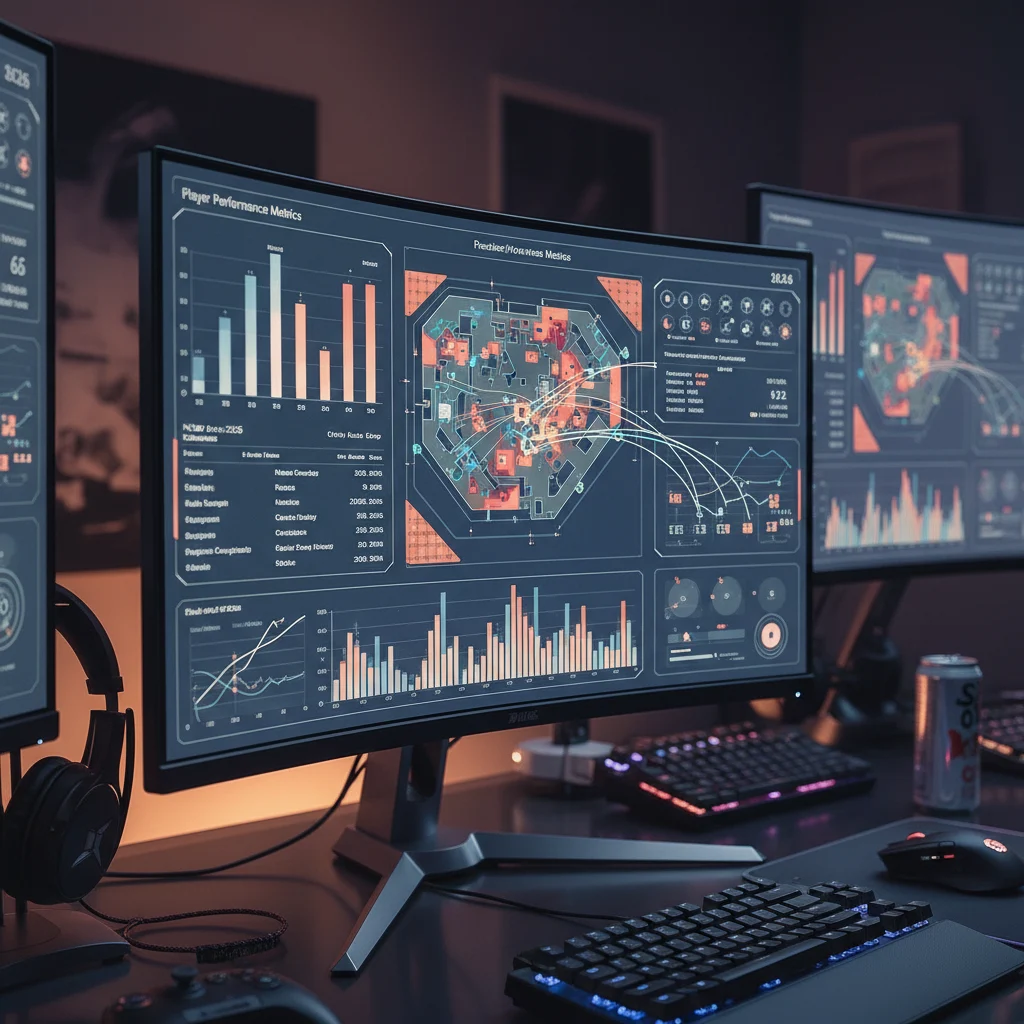
One of the tool’s most talked-about features is the “Clutch Rating” index. This metric evaluates how a player handles late-game situations after their duo partner has been eliminated. In a game like Fortnite, where a single placement point can mean the difference between qualifying and going home, a high clutch rating is gold.
Johansson points to a recent scouting success. His agency flagged a player whose raw placements were mediocre because of a struggling duo partner. The Tracker AI engine suggested that with a more aggressive teammate, the player’s performance rating would jump by 40%.
“We paired them up,” Johansson says. “They just placed third in the latest elite scrims. The AI was spot on.”
The Rush for the 2026 FNCS Global Championship
The timing of this tool is no coincidence. The 2026 FNCS Global Championship is shaping up to be the most competitive event in the game’s history, with rumors of an unprecedented prize pool and a grueling qualification process. Orgs are desperate for an edge.
But some remain skeptical. Can an algorithm truly calculate the human element? Lan tournaments are notorious for breaking even the most statistically perfect players. The noise of the crowd, the physical heat of the stage, and the raw nerves cannot be easily replicated in a database.
Rossi admits the tool is not a magic crystal ball. “It does not measure stage fright,” she says. “But it does measure how a player adapts when their routine is disrupted. If they lose their drop spot, how do they recover? That is a data point we can track.”
What Lies Ahead
As the road to the 2026 championship heats up, the gap between organizations using data and those relying on gut instinct is widening. Scouts who ignore these analytical tools risk falling behind.
For the players, the message is clear. Every match, every arena game, and every scrim is being watched. Not just by human eyes, but by an algorithm calculating their future.