How Fortnite Tracker’s Chapter 7 Telemetry Changes Trios Meta
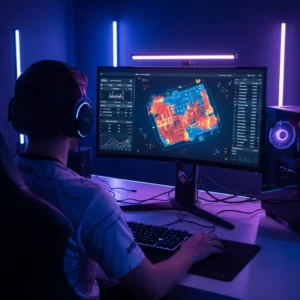
Fortnite Tracker’s new Chapter 7 real-time match telemetry is transforming how competitive trios analyze drop spots and manage storm surge thresholds.
The New Era of Data-Driven Drops
Competitive Fortnite has always been a game of inches. With Chapter 7 now underway, those inches are being measured down to the millisecond. Fortnite Tracker recently rolled out its new real-time match telemetry system. It is completely changing how high-level trios prepare for major tournaments. Pro players are no longer relying on simple replay files. Instead, they are dissecting live data streams to perfect their drop spots and survive the brutal storm surge phases.
Landing in the right spot sets the tone for the entire match. In Chapter 7, Points of Interest (POIs) are more contested than ever. The new telemetry tool tracks exactly where players touch down, down to the precise grid coordinate. It measures loot density, chest spawn rates, and gathering speeds in real time. Trios can see exactly how long it takes them to get full shield compared to rival teams landing nearby.
Optimizing the Early Game
“We realized our split-drop at the northern docks was thirty seconds slower than the tier-one teams,” says Thomas “Rayne” Miller, a veteran competitive coach. “The telemetry data showed us exactly which chests we were missing on our initial glide. It completely restructured our early-game routing.” By mapping out these micro-routines, teams can avoid early-game skirmishes entirely or take them with a distinct loot advantage.
Key features of the drop spot telemetry include:

- Precise touchdown coordinates to measure glide efficiency.
- Real-time loot path tracking to identify slow looting patterns.
- Spawn rate analysis of contested chests across multiple scrim lobbies.
Cracking the Storm Surge Code
The real magic happens during the mid-game. Storm surge is a mechanic designed to weed out passive players by dealing damage to those who have not dealt enough damage to opponents. In lobby-heavy tournament matches, staying above the surge threshold is a constant nightmare. Previously, players had to guess how much damage they needed based on feel. Now, the telemetry API aggregates lobby-wide damage metrics on a live delay.
It predicts the exact surge threshold minutes before the storm phase shrinks. Trios can monitor their live damage standings relative to the rest of the lobby. If they are falling behind, the tool flags safe rotation paths where they can farm surge damage off vulnerable opponents. This removes the panic from mid-game rotations.
Why Survival Rates Are Climbing
Instead of taking risky, desperate fights, teams can play slow and strike only when the data shows they are slipping into the danger zone. It makes the mid-game much more calculated. Analysts note that teams using these live metrics have seen their average placement rise significantly during weekly qualifiers. They simply do not die to the surge anymore.
Naturally, this level of detail has sparked a debate in the competitive community. Some purists argue that real-time data takes away from raw, instinct-based gaming. They believe it rewards analysts over mechanical skill. But at the highest level of esports, optimization is everything. Trios who ignore these telemetry tools are quickly falling behind in regional qualifiers.
The gap between data-driven teams and those relying on pure mechanical skill is widening fast. As Chapter 7 progresses, expects these analytical tools to become just as vital as aim training. In the modern era of Fortnite, the smartest team wins.