Fortnite Bio-Reactive Skins Sync with Smartwatch Biometrics
Epic Games launches new ‘Bio-Reactive’ Fortnite skins that change appearance in real time based on your actual heart rate and smartwatch data.
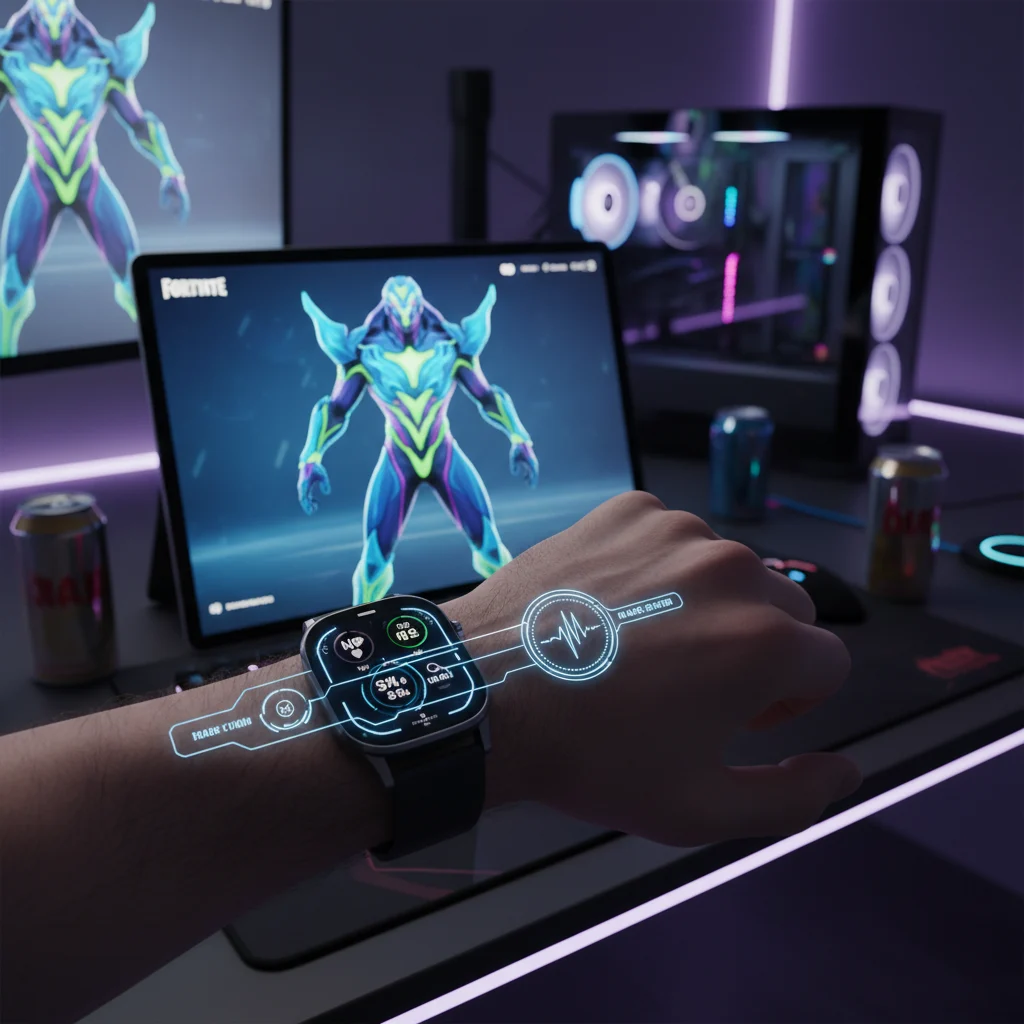
Fortnite is about to get a lot more personal. Epic Games just dropped a new line of cosmetic skins that react to your actual physical body. They do not just change when you get a virtual elimination. Instead, they plug into your real-world smartwatch. If your heart starts racing during a final-circle firefight, your character will literally start glowing to reflect your panic.
Connecting the Virtual and Physical Worlds
How does this tech work? Players link their Epic Games accounts to compatible wearable devices. At launch, this includes the Apple Watch, Garmin, and Samsung Galaxy Watch. Through a companion app, the game pulls biometrics like heart rate and movement speed in real time.
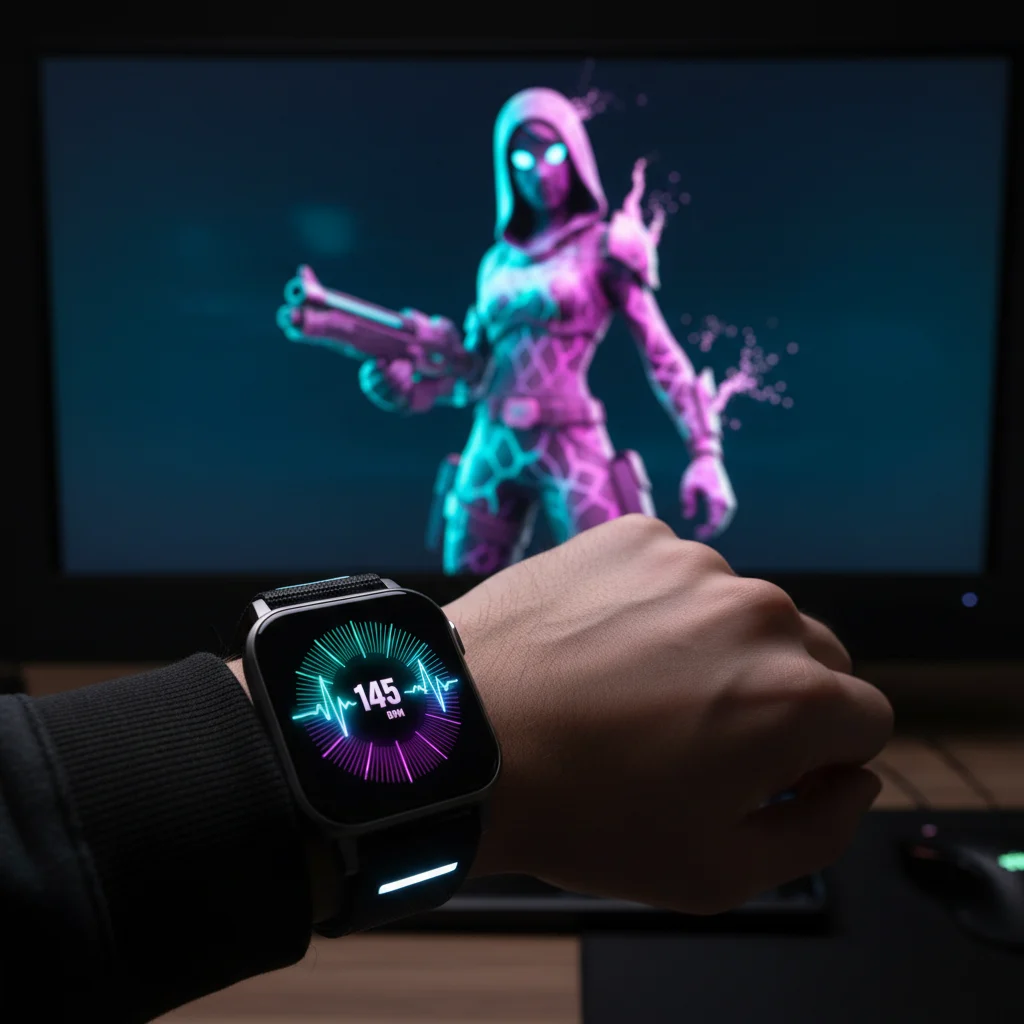
The skin line, named the Pulse Series, features two base characters: Aero and Apex. When your resting heart rate is normal—say, 70 beats per minute—the outfits look like sleek, matte-black futuristic armor. But things change quickly once the pressure builds. Push your heart rate past 100 beats per minute, and neon blue veins light up across the suit. If you hit 130 in a frantic build battle, the armor erupts into a pulsing crimson aura.
‘We wanted to bridge the gap between physical tension and digital expression,’ says Marcus Vance, lead cosmetics designer at Epic Games. ‘Every player knows that feeling of their chest pounding when they are in the top ten. Now, everyone else in the lobby can see it too. You cannot hide your nerves anymore.’
A Simple Setup with Big Tactical Implications
Setting up the new system takes about five minutes. Here is how players get started:
- Download the Epic Sync app on an iOS or Android device.
- Grant the app permission to read health data from your connected smartwatch.
- Scan a QR code on your console or PC screen to pair the devices.
- Equip any Pulse Series skin from your locker.
Once connected, this adds a fascinating psychological layer to competitive matches. Imagine rushing an opponent and seeing their character glowing bright red. You immediately know they are stressed. On the flip side, keeping your cool under pressure keeps your skin dark and stealthy, hiding your anxiety from predatory players. It turns physical composure into a genuine tactical advantage.
Addressing Privacy and Data Concerns
Naturally, sharing biometrics with a giant gaming platform raises some eyebrows. Epic was quick to address these privacy worries. The developer states that biometric data is processed locally on the player’s mobile device and sent to the game server as a simplified numerical scale rather than raw health metrics.
‘We are not storing your health history,’ Vance insisted. ‘The game only reads a simple one-to-five scale of excitement levels. Once your match ends, that data is wiped completely.’
Still, tech privacy advocates are urging caution. Dr. Evelyn Reed, a digital rights researcher, warns that this sets a tricky precedent. ‘It starts with a glowing skin, but it opens the door to games tracking emotional states for targeted ads or dynamic difficulty adjustment,’ she said.
Price, Availability, and System Compatibility
Despite the debate, the gaming community is already buzzing. The Pulse Series bundle is currently sitting in the Fortnite Item Shop for 1,800 V-Bucks. It includes both outfits, a reactive back bling that mimics an EKG monitor, and a harvesting tool that crackles with static electricity whenever you jump or sprint in real life.
There are a few catches at launch. Players on Nintendo Switch and older mobile devices might experience a slight delay in the sync rate. Epic says they are working on patch updates to optimize the Bluetooth pipeline. For now, PC, PlayStation 5, and Xbox Series X players get the smoothest, near-instantaneous feedback.