AI Tool Reshapes Fortnite Pros’ Strategy Before FNCS 2026
A new AI Match Predictor from Fortnite Tracker is shaking up how pro players prepare for the 2026 FNCS Global Championship.
A New Era of Battle Royale Analytics
The road to the 2026 Fortnite Champion Series (FNCS) Global Championship is shaping up to be the most analytical in the game’s history. It is no longer just about who has the fastest edits or the sharpest aim. A new artificial intelligence tool launched by Tracker Network, the creators of Fortnite Tracker, is fundamentally changing how elite players prepare for the lobby.
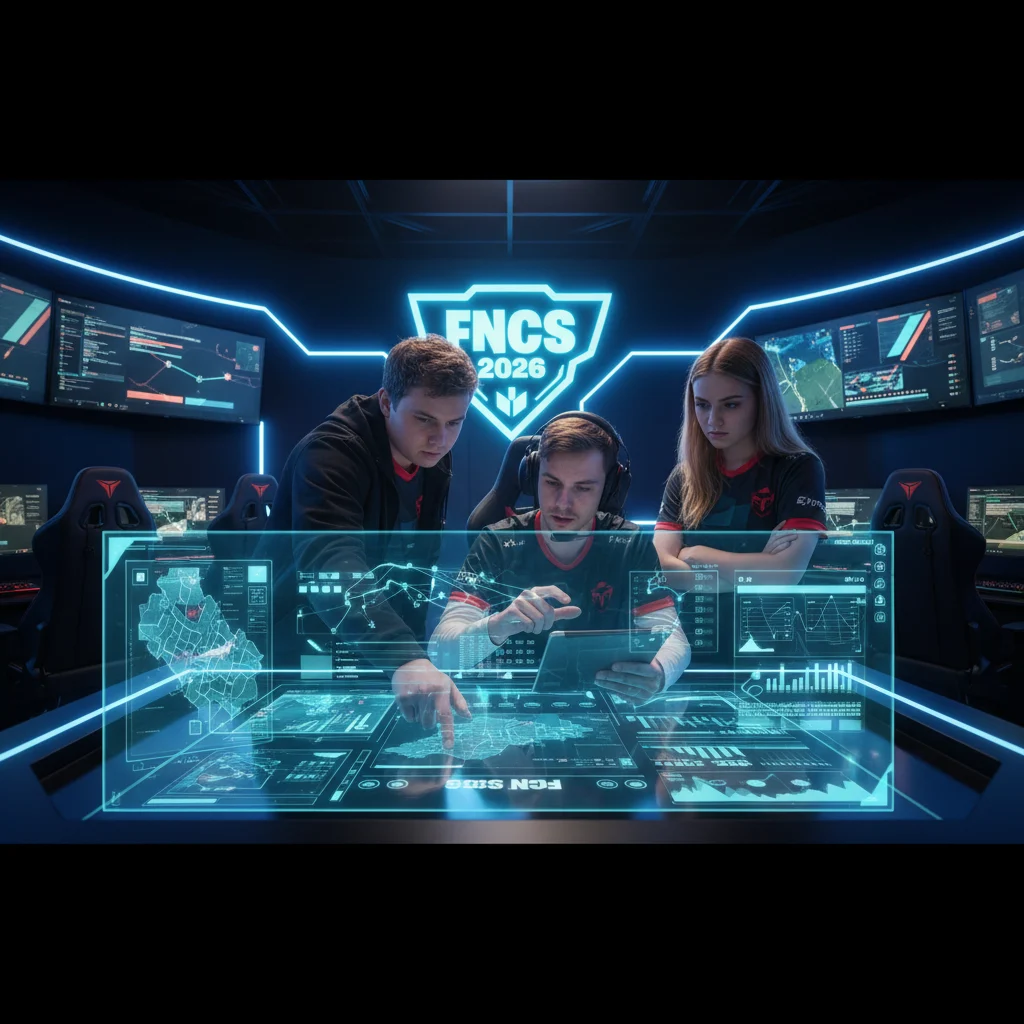
Known simply as the Match Predictor, this platform uses advanced machine learning models trained on millions of competitive matches. It does not just aggregate past placements. Instead, it simulates live tournament lobbies, forecasting how rotations, storm surges, and off-spawn fights will play out before players even board the Battle Bus. For pros aiming for a slice of the multi-million dollar prize pool, this tool has quickly become mandatory reading.
How the Match Predictor Works
At its core, the tool bridges the gap between raw telemetry and real-time strategic decisions. By pulling public API data and processing spatial coordinates, the Match Predictor offers several groundbreaking features:
- Off-Spawn Win Probability: Calculates the exact likelihood of surviving an early-game contest based on drop speed, weapon spawn locations, and opponent history.
- Rotation Heatmaps: Generates predictive paths for the entire lobby during moving zones, highlighting high-risk choke points.
- Storm Surge Forecasts: Warns duos if their current loot-and-scout route will leave them short on damage thresholds during later stages of the game.
This level of detail has completely altered the workflow for competitive coaches. “We used to spend eight hours a day manually reviewing VODs of other regions,” says veteran coach Thomas “Arka” Dupont. “Now, we plug the lobby’s roster into the predictor. Within five minutes, we know which teams are likely to grief our surge routes. It saves us days of guesswork.”
The current map terrain has only accelerated the need for such tools. With the verticality and complex waterways introduced in the latest competitive season, traditional rotation routes are highly risky. A single wrong turn down a canyon can leave a duo trapped under heavy lobby focus. The AI analyzes these geographical bottlenecks, cross-referencing them with storm circle probabilities to suggest pathing that human eyes might overlook.
The Divide Between Data and Instinct
Not everyone in the community is thrilled about the shift. Some purists argue that the magic of Fortnite lies in its unpredictability. In a game where a random heavy sniper shot or an unexpected item drop can ruin a perfect plan, some wonder if relying on algorithms creates a false sense of security.
“AI can’t predict human panic,” argues popular competitive streamer and analyst Jacob “Sureshot” Miller. “When a player is low on health and their screen is shaking, they don’t make the statistically optimal play. They make a desperate play. That is where the predictor fails, and that is where raw instinct still wins championships.”
Despite these criticisms, the numbers speak for themselves. In recent scrimmages ahead of the FNCS regionals, duos who actively utilized the Match Predictor to adjust their landing zones saw a notable 14% increase in late-game qualification rates. The tool allows players to play the percentages, turning a chaotic battle royale into a calculated game of chess.
“It changes your whole mindset,” says professional player Kevin “Vortex” Chen, who recently qualified for the European regional finals. “Before, we just landed where we felt comfortable. Now, if the predictor tells us our favorite drop spot has a 40% survival rate because three aggressive duos are landing nearby, we adapt. We find a new split-drop. It’s not about being brave; it’s about making it to the end game.”
An Uneven Playing Field?
As the countdown to the 2026 Global Championship ticks away, a quiet debate is brewing over competitive integrity. While the basic version of Fortnite Tracker remains free, the deep-dive predictive analytics are locked behind premium tiers. This has raised concerns about a growing gap between signed organization pros and independent, unsponsored duos.
Epic Games has kept a close eye on third-party analytical tools. Because the Match Predictor relies entirely on post-match data and external simulation rather than injecting code into the game client, it does not violate any current terms of service. Still, the sheer advantage it provides has some calling for standardizing these tools for all qualified participants.
Ultimately, the 2026 FNCS will be the ultimate test of this technology. If the duos sitting at the top of the leaderboard in late 2026 are those who spent their nights studying AI simulations, the competitive scene will have crossed a point of no return. The era of the raw mechanical prodigy may be giving way to the era of the data-driven tactician.