New Fortnite Tracker Tools Change FNCS 2026 Scouting
Tracker Network’s new live telemetry tools are giving esports coaches unprecedented data access ahead of the FNCS 2026 Invitational.

The build-up to the Fortnite Champion Series (FNCS) 2026 Invitational has taken an unexpected turn. It is not just about who has the best aim anymore. Now, it is about who has the best data. Tracker Network, the platform behind the widely used Fortnite Tracker website, has quietly rolled out a suite of live-match telemetry tools. The new software is already rewriting the playbook for professional scouts and coaches.
For years, analyzing Fortnite scrims was a grueling task. Coaches had to sit through hours of recorded video streams, trying to piece together where rival duos landed, how they rotated across the map, and when they took damage. Important details were easily missed in the chaos of a 100-player lobby. The new telemetry suite changes this by pulling live, granular data directly from custom tournament lobbies.
Mapping the Chaos in Real Time
The core of the new toolset lies in its instant visualization features. Instead of relying on manual VOD review, analysts can now view a live, interactive map that plots player movements with second-by-second accuracy. This includes:
- Precise drop-spot coordinates and glider deployment altitudes.
- Active rotation paths showing exactly where teams bottleneck during zone pulls.
- Live inventory tracking that reveals team utility and healing setups.
- Real-time storm surge damage-per-minute (DPM) tracking.
“It used to take my staff four hours of recording and spreadsheet entry to map out a single lobby’s drop tendencies,” says Marcus "Envoy" Vance, head coach for a prominent European esports organization. “Now, we have a complete visual heat map of every team’s rotation before the match even ends. It is a massive shift in how we prepare.”
Finding the Hidden Gems
Beyond helping established teams defend their favorite drop spots, the telemetry tools are shaking up the scouting market. Unsigned players are suddenly finding themselves under a spotlight. In competitive Fortnite, raw placement points do not always tell the whole story. A duo might finish in 15th place but possess elite storm surge efficiency—a crucial metric for surviving high-tier lobby surges.
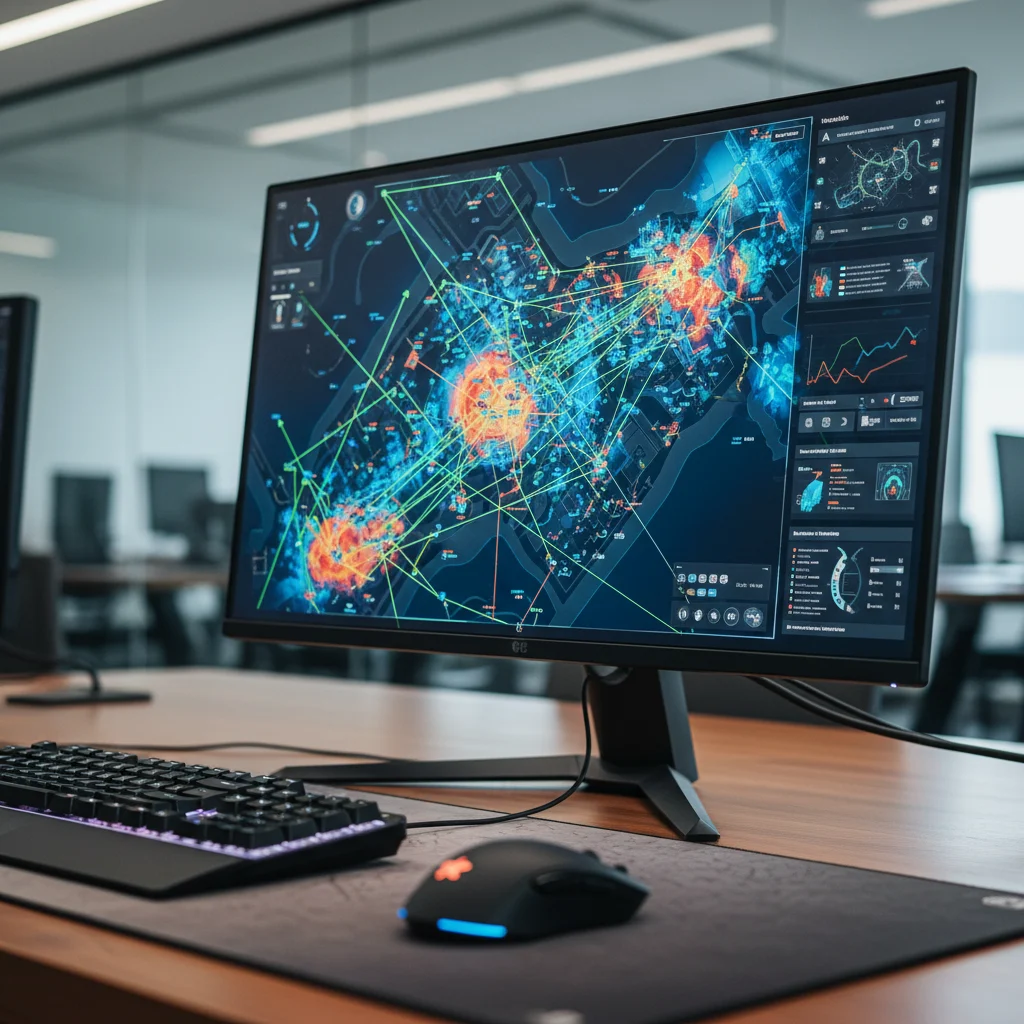
Tracker Network’s new dashboard highlights these hidden metrics. Scouts can filter players by surge damage dealt versus damage taken, material conservation rates, and average survival time after losing a teammate. This allows smaller organizations with tight budgets to identify undervalued talent before they hit the grand stage.
The Technical Hurdles
Building a live data engine for a game as fast-paced as Fortnite was no simple task. Developers had to work within the strict boundaries set by Epic Games to ensure the tool did not violate competitive integrity or anti-cheat protocols. According to sources close to the development team, the telemetry tool operates entirely on post-server data relays, meaning it does not give players an active in-game advantage. The data is delayed by several minutes for spectators to prevent screen-cheating.
“We wanted to build something that elevates the spectator and coaching experience without interfering with the competitive sandbox,” says Sarah Chen, a systems engineer familiar with the project. “The goal was to make the invisible visible. When you watch a traditional sport, you get live player stats instantly. Esports fans and coaches deserve that same level of depth.”
What This Means for the 2026 Invitational
With millions of dollars on the line at the upcoming FNCS 2026 Invitational, the stakes have never been higher. Teams that adapt quickly to these analytical tools are already showing cleaner rotations and more consistent surge numbers in practice scrims. Those who rely solely on old-school instinct are finding themselves left behind in congested zones.
As the tournament approaches, the pressure is on. The raw mechanical skill of Fortnite’s elite players remains undisputed, but the battle is increasingly moving to the server rooms and spreadsheets. Whoever decodes the telemetry data quickest may very well walk away with the trophy.