Fortnite Tracker’s AI Prediction Is Changing Chapter 7 Play
Tracker Network’s new real-time AI match-prediction overlay is changing how competitive players, coaches, and streamers approach Fortnite Chapter 7.
The battle royale formula just got a massive tech upgrade. With the launch of Fortnite Chapter 7, competitive players are no longer relying solely on instincts and raw mechanical skill. Instead, they are staring at live probability percentages flickering in the corner of their screens.
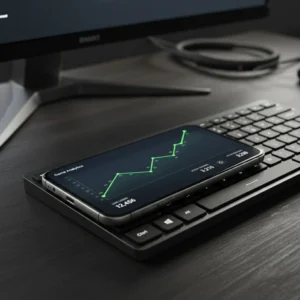
Tracker Network, the team behind the widely popular Fortnite Tracker database, has rolled out a new real-time, AI-driven match-prediction overlay. It’s a tool that calculates your chances of winning a match second by second. This addition is quickly transforming how both casual grinders and seasoned pros approach competitive play.
It feels like a live sports broadcast, but it’s happening right inside the game.
Inside the Prediction Engine
The overlay works by constantly crunching data in the background. Before the battle bus even takes off, the AI scans the lobby. It cross-references public tracker data, assessing the lifetime stats, win rates, and recent performances of all 100 players in the match.
Once the match begins, the math gets complicated. The system continuously tracks player positions, current loadouts, health pools, storm circle behavior, and active kill feeds.
“We wanted to bring esports-level analytics directly to the average player’s screen in real-time,” says Alex Vance, lead developer at Tracker Network. “The algorithm updates every three seconds. It takes into account your current inventory, your distance from the safe zone, and the skill level of the players remaining near you.”
If a player picks up a Mythic weapon, their win probability ticks upward. If they are caught in the storm with low health, the meter plummets. It’s a dynamic, shifting number that turns the chaotic nature of Fortnite into digestible data.
Shifting the Mental Game
For competitive players, this tool is proving to be a double-edged sword. In a high-stakes tournament setting, information is everything. But too much information can easily mess with a player’s head.

Professional player Tyler “Vortex” Higgins has been testing the overlay during scrims. “It completely changes how you make decisions,” Higgins explains. “Normally, if you’re low on materials in the fifth zone, you might panic. But if the overlay tells you that you still have a 35% chance of pulling off the win because the lobby’s average health is low, it gives you a weird kind of confidence. On the flip side, seeing your win chance drop to 4% can ruin your mental state.”
This psychological impact is creating a split in the competitive community. Some coaches are now advising players to turn the live overlay off during critical end-game rotations, fearing it causes hesitation. Others are using it as an invaluable tool for post-match analysis, reviewing exactly where their win probability crashed to identify tactical mistakes.
A New Era for Streamers
While pros debate its competitive utility, content creators have embraced the tool with open arms. Streamers are integrating the overlay directly into their broadcasts, turning casual matches into high-stakes spectacles for their audiences.
Viewers can watch the win-probability meter rise and fall during intense build fights. It acts like a digital tension meter. If a streamer is trapped in a tough clutch situation with a 2% projected chance of survival and somehow pulls off the victory, the payoff feels much larger for the chat.
“It makes the stream feel like an ESPN broadcast,” says popular Fortnite streamer Clara “Luna” Zhang. “My chat loves pointing out when the AI gets it wrong. It adds this extra layer of interaction that we’ve never had before.”
The Question of Fair Play
Whenever a third-party tool enters the competitive sphere, the question of competitive integrity arises. Does having a real-time AI assistant constitute an unfair advantage?
So far, Epic Games hasn’t taken action against the overlay. Because the tool relies entirely on public API data and passive screen analysis, it doesn’t inject code into the game client or automate any gameplay actions. It doesn’t act as an aimbot or wallhack. It simply translates existing information into statistical probabilities.
Still, some purists argue that having a real-time data analyst on your screen crosses a line. For now, the overlay is permitted in casual matches and public ranked queues, though tournament organizers are keeping a close eye on how it affects the balance of high-level play.
As Chapter 7 progresses, players will have to adapt. Whether you view the new overlay as a vital coaching tool or an unwelcome distraction, one thing is clear: the era of playing solely on gut feeling is coming to an end.