Fortnite Tracker AI Tool Reshapes Chapter 7 Strategy
Tracker Network’s new AI-powered Rotation Analyst is changing how competitive Fortnite players plan their mid-game movement in Chapter 7.
A New Era for Fortnite Strategy
Navigating a competitive Fortnite match has always been a game of split-second decisions. In Chapter 7, those choices are harder than ever. The current map features steep vertical terrain, unpredictable storm shifts, and highly mobile items that catch even seasoned veterans off guard. To help players survive the chaotic mid-game transition, Tracker Network has launched a brand-new tool: the Rotation Analyst.
This AI-driven feature on Fortnite Tracker aims to change how tournament players plan their movement. Instead of relying purely on intuition or trial and error, competitors can now use machine learning to map out their paths. It is a major shift in how players approach the battle royale’s most difficult phase.
How the Rotation Analyst Works
At its core, the tool functions like a highly specialized GPS for the storm circles. It works by analyzing millions of data points harvested from high-level ranked matches and tournament lobbies. The AI evaluates several key variables:
- Historical player movement patterns based on specific battle bus routes
- Terrain layout, including choke points and high-ground bottlenecks
- Storm circle positioning and speed
- The location of key resources like vehicles and launchpads
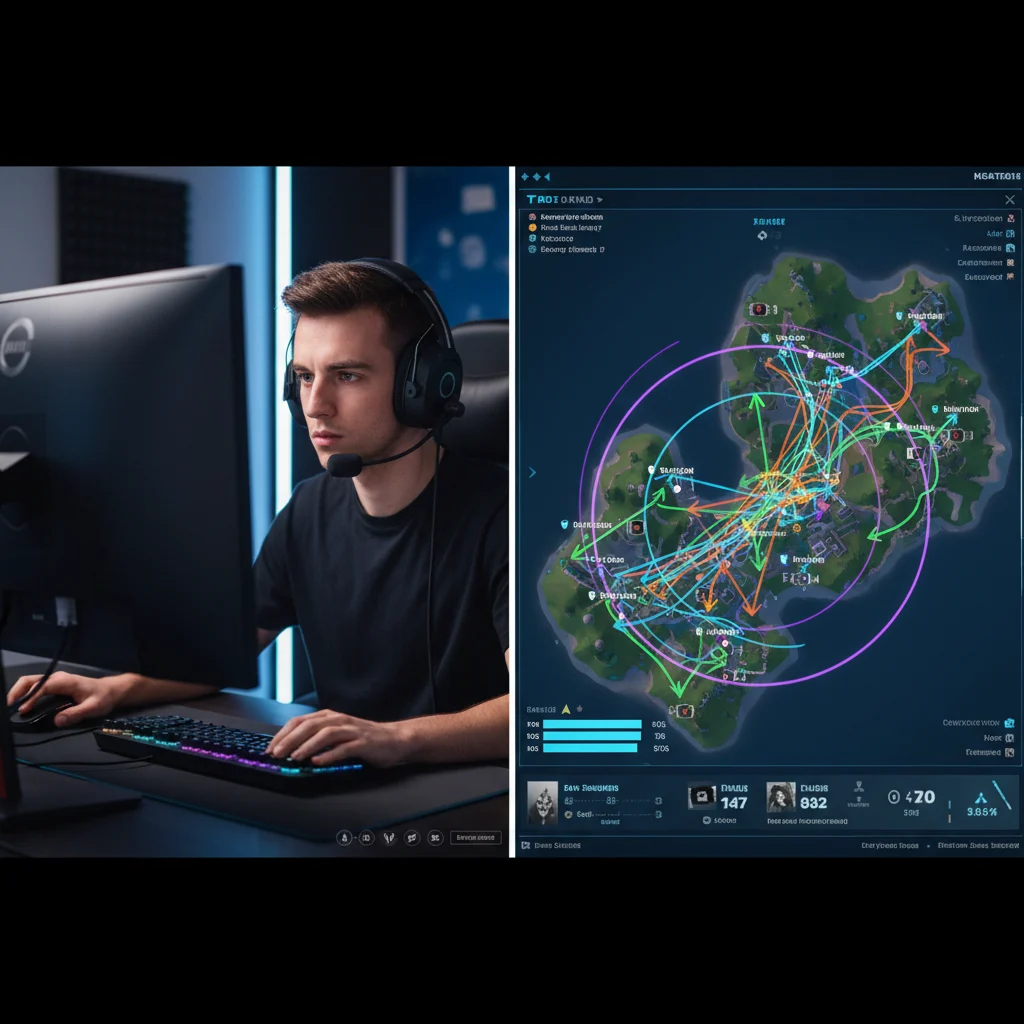
By processing these factors, the tool generates a predictive heatmap. It highlights high-risk zones where fights are likely to break out and identifies ‘dead sides’—quiet areas of the safe zone where a team can rotate without drawing attention. Players can plug in their drop spots and see the most efficient pathing options calculated instantly.
Navigating the Chapter 7 Meta
Chapter 7 has introduced a variety of unique obstacles that make rotational planning highly complex. With the introduction of new environmental hazards and shifting slipstreams, players cannot rely on old habits. The map’s layout is much more segmented than in previous chapters, meaning a wrong turn can leave a team trapped at the bottom of a cliffside while the storm closes in.
The AI takes these environmental factors into account. It calculates the verticality of the terrain, letting players know if a proposed route requires excessive building materials or if it can be navigated on foot. This level of detail is crucial when every single piece of wood, brick, or metal can decide a final endgame fight.
Coaches and Pros Are Already Adapting
Competitive Fortnite has become a multi-million dollar esport where tiny advantages make a massive difference. Professional coaches are already integrating this new tool into their daily training routines. It saves hours of manual work during match reviews.
Previously, analyzing VODs required coaches to manually track twenty different teams across multiple matches to figure out their favorite paths. Now, the AI does that heavy lifting in a fraction of a second. It allows teams to spend less time studying raw footage and more time practicing specific scenarios.
Some pros are using it to counter-strat their rivals. If a team knows where the top-seeded duo likes to rotate, they can use the analyst to predict where those players will be at the third or fourth zone shrink. This makes gatekeeping—the act of waiting at the edge of the zone to eliminate incoming players—much more deliberate and deadly.
Levelling the Playing Field
While top-tier esports organizations have analysts to break down game film, casual competitive players often do not. This new tool could help close that gap. Anyone with access to Fortnite Tracker can now look at their own match history and see where their rotations went wrong.
It acts as a digital coach. If you keep dying during the third zone pull, the tool can show you alternative routes that avoid the lobby’s heaviest congestion. It turns raw, confusing game data into visual, actionable advice that any aspiring champion can understand.
The Future of Esports Analytics
The introduction of the Rotation Analyst signals a broader trend in competitive gaming. Data is no longer just about tracking kill-death ratios or win percentages. It is about understanding the flow of a match in real-time.
As Chapter 7 progresses, the AI will continue to learn. As players find new tricks and Epic Games updates the map, the machine learning models will adapt. For now, players who refuse to embrace this technological shift might find themselves left behind in the storm.