How Fortnite Tracker’s Live UEFN Stats Are Boosting Creator Pay
A new real-time analytics dashboard from Fortnite Tracker is helping indie creators patch bugs instantly and maximize engagement payouts in Chapter 7.
The launch of Fortnite Chapter 7 has brought plenty of flashy changes to the battle royale, but the biggest revolution is happening quietly behind the scenes. Indie developers building custom maps inside Unreal Editor for Fortnite (UEFN) are suddenly finding themselves armed with the kind of data that was once the exclusive domain of major gaming studios. Fortnite Tracker, a popular stats platform run by Tracker Network, recently launched a real-time UEFN analytics dashboard. It’s completely reshaping how creators design, update, and monetize their custom maps.
For a long time, UEFN creators worked in the dark. Epic Games’ official dashboard provides solid data, but there’s a catch: it’s delayed. Creators often have to wait up to 24 hours to see how their maps performed. If a new game mode has a game-breaking bug or a frustratingly difficult level, players simply leave. By the time the creator sees the drop in retention the next day, hundreds of potential players—and the revenue they represent—are already gone.
Eliminating the Guesswork
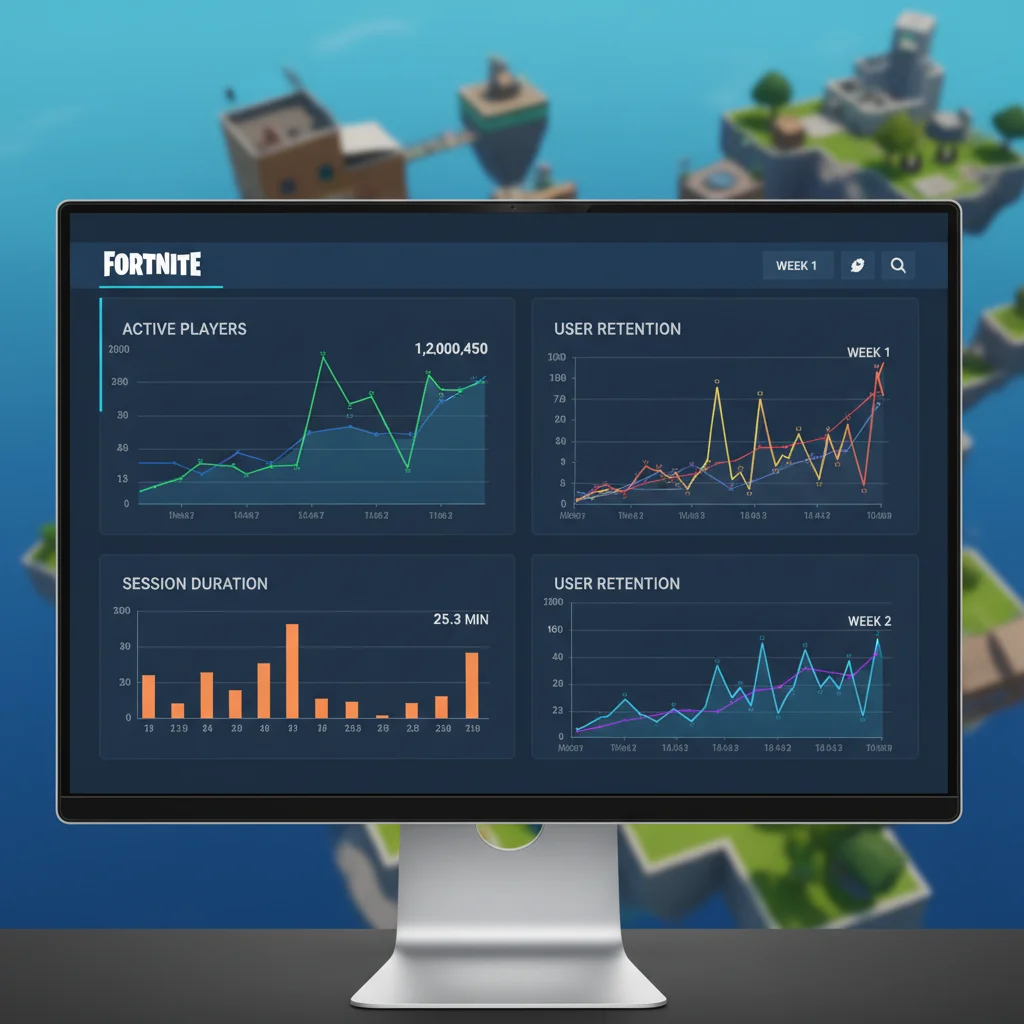
The new third-party dashboard changes everything. By pulling live public API data, the tool offers minute-by-minute updates on player counts, average session lengths, and overall map performance. Creators can watch live as their player base reacts to a newly published patch. If a hotfix breaks a lobby, they can see the immediate dip and roll it back in minutes.
“Before this dashboard, we were basically guessing why players quit our maps,” says Alex Chen, an independent developer who runs the custom map studio Oasis Games. Chen recently launched a high-speed racing map in Chapter 7. “On launch day, we saw our active player count plunge from 800 to 50 within ten minutes of a minor update. Thanks to the real-time tracker, we realized our spawn points were bugged. We patched it in fifteen minutes. Without those live stats, we would’ve left that bug live for a whole day and lost our entire player base.”
The Math Behind Chapter 7 Monetization
In Fortnite’s Creator Economy 2.0, engagement is everything. Epic Games distributes a massive portion of its net revenue back to map creators based on player behavior. The payout formula relies heavily on two main metrics:
- Retention: Players returning to a map day after day.
- Playtime: How long players stay during a single session.
In Chapter 7, Epic has tweaked these formulas to reward maps that keep players active for longer, uninterrupted stretches. This makes retention optimization a high-stakes game. A single poorly designed level can ruin a map’s earning potential. With the new tracking tools, developers can run live A/B tests. They can tweak the difficulty of a boss fight, change the layout of a lobby, or adjust weapon spawns, and instantly see if those changes keep players in the game longer.
Turning Hobbies into Serious Businesses
Tracker Network designed this tool specifically to level the playing field for solo developers and small teams who don’t have the resources of large publishers. “Our goal was to give indie creators the same caliber of live operational telemetry that AAA studios use to run live-service games,” says Sarah Miller, a product manager at Tracker Network. “When you can see live spikes in player engagement, you can make smarter business decisions on the fly.”
This level of precision is already changing how indie teams secure funding. With reliable, real-time analytics reports, creators can now present concrete engagement data to brands and advertisers looking for custom map integrations inside Fortnite. They can prove exactly how many players interact with a branded zone and for how long. As Chapter 7 progresses, the barrier between professional game development and community map creation is shrinking fast. Thanks to real-time analytics, the next viral hit in Fortnite won’t just be a lucky break—it’ll be the result of careful, data-driven optimization.